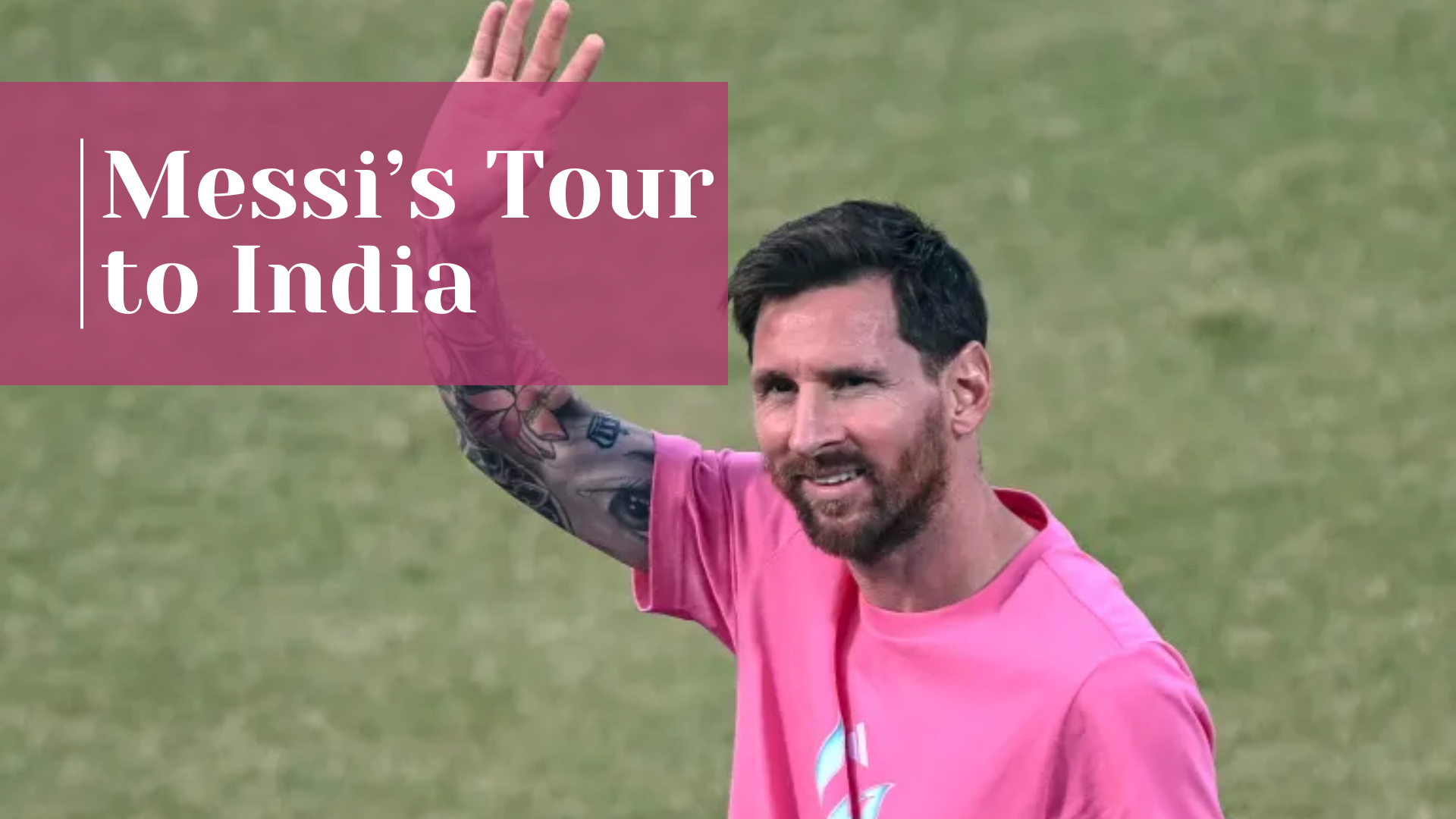
Lionel Messi’s highly anticipated visit to India in December 2025 drew massive attention from fans, media and authorities alike, but it was a tour of contrasts — moments of celebration and connection mixed with unexpected chaos. The football legend’s three-day “GOAT Tour” was designed as a celebration of sport, culture and celebrity, but it also exposed strains in event management and fan expectations in a country where Messi’s popularity rivals even the biggest local stars.
Messi, the Argentina captain and seven-time Ballon d’Or winner, arrived in India with a schedule stretching across four major cities — Kolkata, Hyderabad, Mumbai and New Delhi — intended to showcase the country’s passion for football while giving Indian fans rare access to one of the all-time greats. Fans lined up for hours at stadiums and public events, many wearing Argentina jerseys, painted faces and carrying banners expressing their admiration for the player. But the visit that was meant to be unforgettable took a sharp turn early on — beginning with chaotic scenes in Kolkata.
A Chaotic Opening in Kolkata
The tour’s opening event at Salt Lake Stadium in Kolkata was meant to be a highlight, featuring a scheduled appearance by Messi, the unveiling of a new statue, and celebratory fan activities. Instead, it became one of the most talked-about moments of the tour — not for the football or the festivities, but for the disorder that erupted among the crowd.
Thousands of fans had paid significant amounts for tickets, eager to catch even a glimpse of Messi. When his appearance lasted only about 20 minutes and was surrounded by dozens of VIPs and officials, many regular ticket-holders found themselves unable to see him on the field. Frustration grew quickly as people felt short-changed on both time and access. Some fans began chanting, others threw chairs and bottles, and parts of the stadium infrastructure were damaged in the unrest. Security lines were breached, and several spectators were detained by police in response to the disorder.
The chaos prompted a public apology from West Bengal Chief Minister Mamata Banerjee, who said she was “disturbed and shocked” by how badly the event was handled. She announced a formal inquiry into the management of the stadium event and pledged to hold organizers accountable for the lapse in planning and crowd control. Authorities also moved quickly to detain the chief event organizer as part of the broader investigation into the incident.
For many fans present that day, the experience was disheartening. Social media was full of firsthand accounts of confusion, disappointment and anger — messages from people who had invested time, money and emotional energy in seeing Messi only to walk away feeling neglected by the event setup. Even supporters who loved Messi could not hide their frustration at how the situation unfolded, with some decrying it as a failure of planning rather than a failure of passion.
The Broader Tour Across Major Cities
Despite the rocky start in Kolkata, Messi’s itinerary continued with events that were smoother and more celebratory. In Hyderabad, he participated in exhibition activities that included football clinics for young players and moments of interaction with enthusiastic crowds. The city welcomed him with open arms, and the atmosphere was more controlled, allowing fans to enjoy the experience without the turbulence seen in the east.
In Mumbai, Messi shared a lighter moment with sporting icons and fans at the Wankhede Stadium. The Argentine star met with local sports legends and joined moments of camaraderie and playful football demonstrations. One of the personal highlights noted by viewers was Messi’s interaction with cricket great Sachin Tendulkar — a symbol of cross-sport respect and admiration in a country where cricket holds enormous cultural sway.
The final leg of the tour took place in New Delhi, where Messi appeared in more managed settings, including cultural engagements, formal greetings, and opportunities to connect with supporters without the massive crowds that overwhelmed Kolkata. He thanked Indian fans for their warmth and celebrated the passion he encountered on the journey across the country.
Cultural Touchpoints and Memorable Moments
Beyond the football spectacle, Messi’s visit included several cultural and symbolic moments that helped shape the narrative of the trip. In Jamnagar, at a wildlife conservation centre founded by a leading Indian business figure, Messi participated in traditional rituals and offered prayers, creating a deeply emotional moment for many observers. The image of the global football star chanting a sacred mantra and expressing reverence for local customs resonated widely on social media, with fans applauding his humility and openness to India’s spiritual landscape.
On social platforms, fans also shared viral scenes of Messi’s visit to the conservation centre, where he interacted with young animals and emphasized kindness toward nature — a gesture that many saw as transcending sport and touching on universal values.
Perhaps one of the most talked-about gestures came when a rescued lion cub was named in Messi’s honour, a symbolic tribute that quickly went viral online. The moment intertwined sport, wildlife conservation and cultural symbolism in a way that matched the emotional highs of the tour.
Economic, Social and Political Reactions
The mixed reactions to Messi’s visit were not limited to fans. Public figures and critics weighed in on the expense and organisation of such a high-profile tour. Some Indian sports administrators questioned whether the significant sums spent on the events were justified, particularly given ongoing debates over investment in local football infrastructure and league development. Others defended the tour as a once-in-a-generation opportunity to spotlight football in a cricket-dominated market.
Political responses also emerged, with state officials facing scrutiny over crowd management and safety protocols. Calls for accountability were voiced by both ruling figures and opposition voices, citing the Kolkata disorder as emblematic of broader issues in handling large-scale celebrity events.
Messi’s Reflections and Closing Message
As the tour drew to a close, Messi took to social media with a message of gratitude and hope. He spoke about the warmth of Indian fans and the potential he sees for the growth of football in the country. For players, youth and coaches alike, his presence was not just a high-profile visit, but an inspiration — one that ignited conversations about football’s place in India’s sporting culture.
Messi’s final day in New Delhi combined relaxed interactions, cultural acknowledgement and reflections on his journey. Though his trip began with unexpected scenes, the overall narrative became one of connection, passion and dialogue between sporting worlds.
What Comes Next for Football in India
Messi’s visit has highlighted both the enthusiasm and challenges facing football in India. The chaotic scenes in Kolkata underscored the need for improved event planning, crowd control and fan engagement strategies. At the same time, the emotional and cultural responses in Hyderabad, Mumbai and Delhi showcased a fanbase eager for global football experiences.
Sports administrators are now expected to review how such events are organised, with an eye toward elevating standards so that future visits by international stars can be celebrated without safety concerns. For the broader football community, Messi’s Kerala exhibition match earlier in the year and the December tour conversations have fueled fresh debates about youth development, league management and the potential growth trajectory of the game in India.
Whether Messi’s tour becomes remembered more for its chaotic opening or its later moments of cultural exchange, it has undeniably left an imprint on India’s sporting landscape — one that will be discussed long after his departure.