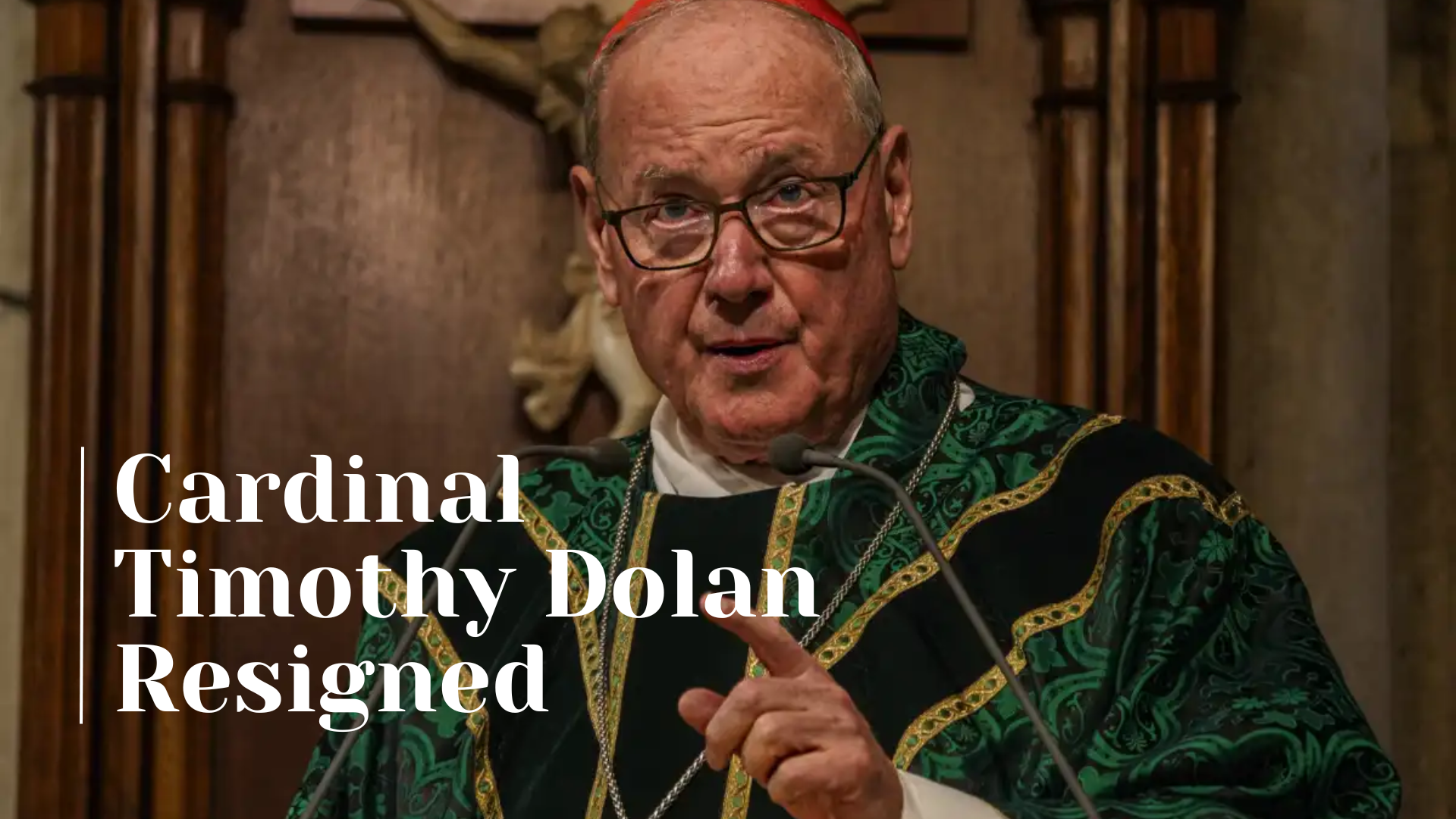
In a moment of significant transition for the Catholic Church in the United States, Pope Leo XIV has officially accepted the resignation of Cardinal Timothy M. Dolan as Archbishop of New York. The announcement marks the end of one of the most visible and influential tenures in American Catholic history and paves the way for Bishop Ronald A. Hicks to assume leadership of one of the nation’s most prominent archdioceses.
Cardinal Dolan, who turned 75 earlier this year, submitted his resignation as required by canon law, which asks bishops to step down upon reaching that age. The Vatican’s acceptance of his resignation comes after a long career marked by national prominence, public engagement, and active participation in both ecclesiastical and civic life. Bishop Hicks, currently leading the Diocese of Joliet in Illinois, is set to take over in early 2026, signaling both continuity and subtle change for the archdiocese.
A Tenure of Influence and Visibility
Cardinal Dolan has been the Archbishop of New York since 2009, making his nearly two-decade leadership a defining era in the city’s Catholic community. During his time in office, Dolan became known not only for his pastoral work but also for his frequent engagement in national discussions on religion, morality, and social policy. He served as president of the U.S. Conference of Catholic Bishops and was often a public voice on issues such as religious freedom, life ethics, and faith-based community initiatives.
Beyond national attention, Dolan’s tenure was notable for his hands-on leadership within New York. He oversaw countless parish activities, guided charitable organizations, and maintained an active presence in civic events, from commemorations to public forums. While some of his interventions sparked debate, particularly when intersecting with politics, his overall influence on the Catholic community and broader society remained significant.
The Significance of the Resignation
In the Catholic Church, it is customary for bishops to submit their resignation upon reaching the age of 75, allowing the Pope to accept and appoint successors as appropriate. Cardinal Dolan’s resignation, therefore, is part of a routine yet highly visible transition, given the prominence of the Archdiocese of New York. With roughly 2.5 million Catholics and one of the largest networks of parishes, schools, and charitable institutions in the country, the archdiocese holds a position of extraordinary influence both in religious and social spheres.
The handover from Dolan to Hicks is expected to be more than ceremonial. Observers note that leadership style and priorities often shape the way dioceses handle pastoral care, community engagement, and administrative decisions. In a city as dynamic and diverse as New York, the new archbishop will face challenges ranging from addressing clergy shortages to guiding educational and charitable programs while maintaining spiritual oversight.
Introducing Bishop Ronald Hicks
Bishop Ronald A. Hicks, 58, brings a pastoral style that contrasts in tone with that of Dolan, emphasizing inclusivity and outreach. Born and raised in the Chicago area, Hicks has led the Diocese of Joliet since 2020 and has earned recognition for his focus on immigrant communities, youth engagement, and interfaith collaboration. His experience extends to international missionary work, giving him a broad perspective on the Church’s global mission and the importance of cultural sensitivity.
Hicks’ appointment reflects a broader vision for church leadership that blends fidelity to doctrine with pastoral responsiveness. In New York, his challenge will be to connect with a diverse urban population, guide parish priests, and ensure that the archdiocese continues to thrive both spiritually and socially. Observers also note that Hicks’ leadership style may help foster deeper engagement with young Catholics, immigrant populations, and those who have traditionally felt distant from church activities.
Broader Church Context
The transition in New York comes at a time of wider generational change within the Catholic hierarchy. Across the world, senior figures are reaching retirement age, prompting similar leadership adjustments. For the U.S., these changes coincide with ongoing discussions about clergy, education, parish sustainability, and the Church’s role in a rapidly changing society.
In New York, Cardinal Dolan’s tenure included overseeing settlements and institutional reforms related to past misconduct cases, efforts that continue to shape the archdiocese’s priorities. Bishop Hicks will inherit these responsibilities alongside the opportunity to implement new programs and initiatives aimed at strengthening community connections, fostering vocations, and maintaining the vitality of church institutions.
Community Reactions
Reactions to Dolan’s resignation and Hicks’ appointment have been varied. Many parishioners and clergy expressed gratitude for Dolan’s leadership, praising his dedication, public presence, and contributions to both religious and civic life. He was widely regarded as a charismatic and tireless leader whose influence extended beyond the church walls.
At the same time, Hicks’ appointment has been welcomed as a new chapter that could bring a fresh perspective to the archdiocese. Observers highlight his experience with immigrant communities, focus on pastoral care, and reputation for inclusivity as strengths that may shape the archdiocese’s future. Both clergy and lay leaders have expressed cautious optimism that the transition will maintain continuity while fostering renewed energy and engagement among the faithful.
What Lies Ahead
Bishop Hicks is expected to be formally installed as Archbishop of New York in February 2026. In preparation, he will engage with diocesan leaders, clergy, and community representatives to outline priorities and ensure a smooth transition. The early months of his tenure are likely to focus on understanding the specific needs of New York parishes, addressing administrative matters, and connecting with local communities in a meaningful way.
For Cardinal Dolan, this moment represents a time of reflection and the conclusion of an influential chapter. His legacy includes decades of service, national visibility, and significant contributions to both church and society. For the archdiocese, the transition offers a chance to maintain tradition while embracing the perspectives and initiatives that Bishop Hicks brings.
The resignation of Cardinal Timothy Dolan and the appointment of Bishop Ronald Hicks signify a key moment in the leadership of the Catholic Church in the United States. It marks both continuity and change, honoring the past while preparing for the future. As New York’s Catholic community anticipates the installation of its new archbishop, the focus will be on sustaining faith, expanding outreach, and navigating the challenges of one of the most dynamic and diverse dioceses in the world.
This transition serves as a reminder that leadership in the Church is both a matter of governance and pastoral care — and that every change at the top can reverberate throughout communities, shaping the spiritual, cultural, and social fabric of the faithful for years to come.