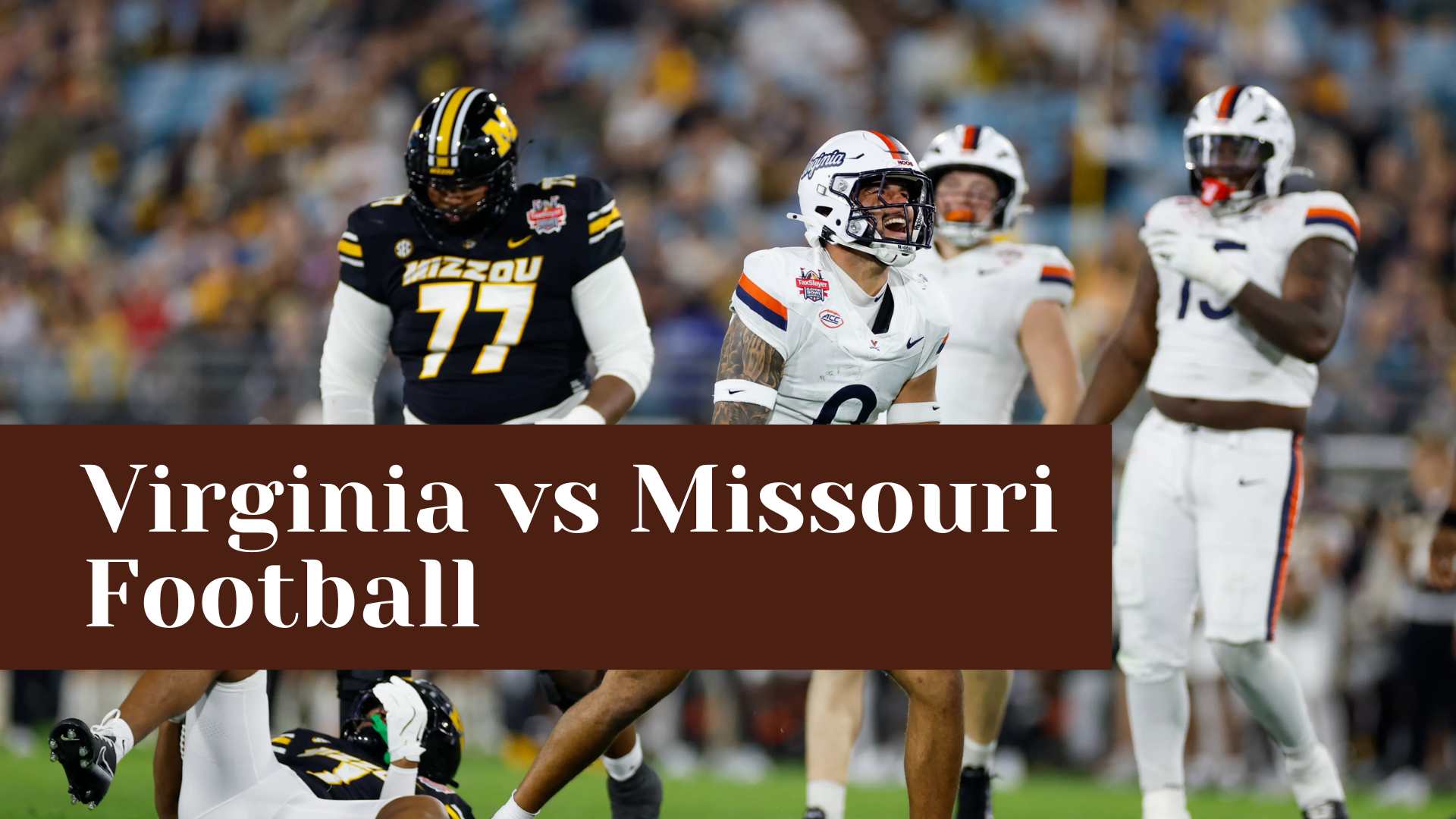
Jacksonville, Florida — On December 27, 2025, the TaxSlayer Gator Bowl showcased a tense and tightly contested matchup as the Virginia Cavaliers narrowly defeated the Missouri Tigers 13–7. In a game defined by disciplined defense, careful clock management, and strategic execution, Virginia emerged with the win after a methodical second-half comeback. For fans of college football, the game was a demonstration of how defensive strength and patient offense can decide a high-stakes bowl game.
First Half: Missouri Sets Early Tone
The game began with Missouri striking first. On the opening drive, the Tigers displayed a mix of short passing and effective rushing plays to advance down the field. Missouri’s offensive line created pockets for their quarterback and openings for their running backs, leading to a touchdown early in the first quarter. That score gave the Tigers a 7–0 lead and a sense of momentum.
Virginia, however, responded with composure. The Cavaliers’ defense adjusted to Missouri’s play style, emphasizing containment and forcing the Tigers to stretch plays to gain yardage. Several drives ended in punts, and Missouri struggled to maintain the same efficiency after the opening possession. By the second quarter, Virginia managed to put together a field goal drive, narrowing the score to 7–3. The first half concluded with both teams locked in a tactical battle, highlighting the importance of defense and field position over explosive scoring plays.
Turning Point: The Second Half Surge
The second half saw Virginia begin to take control. The Cavaliers executed a measured approach, mixing short passes with rushing plays to keep Missouri off balance. By controlling the clock and sustaining long drives, Virginia wore down the Tigers’ defensive line, gradually shifting momentum in their favor.
A critical drive in the third quarter resulted in Virginia’s only touchdown of the night, giving them a 10–7 lead. This drive demonstrated the Cavaliers’ patience and execution; they converted key third downs and maintained composure under pressure, showcasing the importance of strategic play-calling in tight games. Later in the quarter, Virginia added a field goal to extend the lead to 13–7, a margin that Missouri would be unable to overcome despite several late attempts.
Defensive Mastery Defines the Game
Defense dominated much of the contest. Virginia’s linebackers and secondary repeatedly disrupted Missouri’s offensive rhythm. Key tackles for loss and pressures on third downs forced Missouri into longer, riskier plays. The Cavaliers’ defense also excelled at containing explosive plays, limiting Missouri’s scoring opportunities to their opening touchdown drive.
Missouri’s defense also played effectively, keeping the game close throughout. The Tigers applied consistent pressure on Virginia’s quarterback and defended against big plays on the ground. Their defensive front prevented Virginia from breaking away early, ensuring that the game remained competitive. However, as the second half progressed, fatigue and sustained offensive pressure from Virginia created gaps that the Cavaliers exploited to gain the decisive edge.
Player Highlights
Virginia’s offense relied on a balanced approach. The quarterback showed poise under pressure, completing a series of short, high-percentage passes that advanced the ball efficiently. The running game provided consistent support, controlling the clock and keeping Missouri’s defense on the field. Key receivers made critical catches on third-down plays, sustaining drives that ultimately resulted in scoring opportunities.
Defensively, Virginia’s standout players included the linebackers who consistently stopped Missouri’s rushing attack, as well as defensive backs who forced incompletions on key passing attempts. Their discipline and positioning made it difficult for the Tigers to gain significant yardage in crucial moments.
Missouri had notable performances as well. Their quarterback demonstrated mobility and accuracy on early drives, while several skill position players made plays that kept the Tigers in contention. However, missed opportunities, including stalled drives and a failed field goal attempt, ultimately limited their scoring potential.
Strategic Implications
The game highlighted the importance of patience and tactical execution in postseason college football. Virginia’s strategy emphasized control of the line of scrimmage, disciplined play-calling, and minimizing mistakes. By executing methodical drives and capitalizing on Missouri’s stalled possessions, the Cavaliers secured a win without relying on high-risk plays or aggressive passing strategies.
Missouri, meanwhile, showed that even with a strong start, sustained defensive pressure from the opponent can limit opportunities. The Tigers were forced into reaction mode for much of the second half, attempting to recover from a deficit while facing a disciplined Virginia defense. The inability to maintain early momentum underscored the challenge of balancing offensive aggression with strategic patience in tightly contested games.
Historical Significance for Virginia
For the Cavaliers, the Gator Bowl victory capped a historic season. With 11 wins, Virginia set a new program record for single-season victories, reflecting consistent excellence throughout both conference and postseason play. The win demonstrated the team’s ability to perform under pressure and adapt to high-stakes situations, emphasizing the growth of the program in recent years.
This bowl performance also highlighted the strength of Virginia’s coaching staff and game-planning capabilities. Their ability to adjust defensive schemes, manage the clock, and execute a balanced offensive strategy proved crucial in securing the win against a competitive opponent.
Missouri’s Season and Lessons Learned
Missouri concluded their season with an 8–5 record, maintaining a winning campaign despite the Gator Bowl loss. The Tigers’ season was marked by strong defensive performances and flashes of offensive efficiency, although inconsistency limited their overall success. Key players gained valuable experience in high-pressure situations, providing a foundation for future development.
The game also offered insights into areas for improvement. Sustaining drives, converting on critical third downs, and executing consistently in the second half emerged as focal points for Missouri’s offseason planning. Lessons from this contest are likely to inform both player development and strategic adjustments in the 2026 season.
Fans and Atmosphere
The Gator Bowl atmosphere reflected the stakes and competitiveness of the matchup. Fans of both teams experienced a night of suspense and tactical football, with moments of excitement on both sides of the field. While the game lacked explosive scoring bursts, the tension and strategic depth provided a compelling experience, showcasing the subtleties of high-level college football.
Closing Perspective
The Virginia-Missouri Gator Bowl offered a clear example of football as a game of discipline, strategy, and execution. Virginia’s victory was earned through methodical offensive drives, disciplined defense, and the ability to capitalize on crucial moments. Missouri’s performance, while competitive, ultimately fell short due to missed opportunities and the cumulative effect of sustained defensive pressure.
For Virginia, the win symbolizes the culmination of a record-setting season and a milestone in program history. For Missouri, it represents a learning experience and a foundation for growth. Both teams demonstrated resilience, competitiveness, and the hallmarks of disciplined college football, leaving fans with a memorable contest defined not by high scores but by execution and strategy.