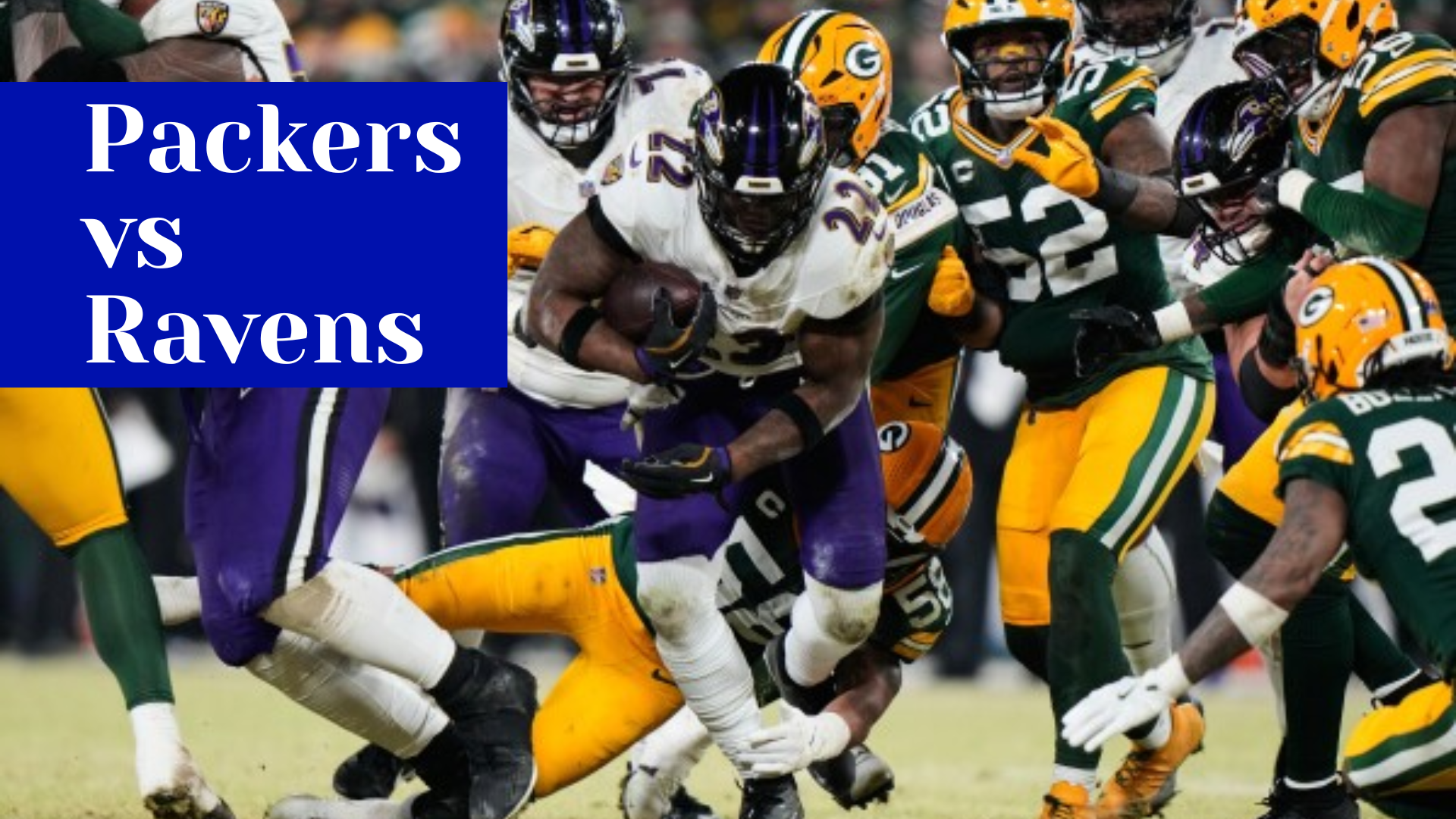
Lambeau Field has seen plenty of cold-weather battles over the decades, but this one slipped away from Green Bay earlier than many expected. On a December night built for playoff-level intensity, the Baltimore Ravens walked into Wisconsin and left with a convincing 41–24 win over the Green Bay Packers, turning what was billed as a tight late-season contest into a statement performance.
The final score reflected more than just execution. It showed control. From the opening drives to the closing minutes, Baltimore dictated tempo, leaned on its identity, and forced Green Bay to respond rather than initiate. For the Packers, the night became an uphill climb that never quite leveled out.
A fast start sets the tone
Baltimore wasted little time making its intentions clear. The Ravens opened the game with a physical, methodical drive that immediately tested Green Bay’s defensive front. Short gains piled up, the clock moved, and the Packers were forced to commit extra bodies to the line of scrimmage.
That adjustment opened space elsewhere. Baltimore mixed in play-action, spread the field just enough, and kept Green Bay guessing. By the time the first quarter ended, the Ravens had already established momentum and a clear advantage in time of possession.
Green Bay’s defense managed to limit explosive passes early, but the cost came in steady, punishing runs that wore down the unit snap by snap.
Derrick Henry dominates the night
There was no avoiding the central figure of the game. Derrick Henry delivered one of the most commanding rushing performances seen this season, repeatedly breaking through initial contact and forcing defenders into difficult one-on-one tackles.
Henry’s runs weren’t just productive; they were demoralizing. Gains of four and five yards on early downs kept Baltimore ahead of schedule, allowing the offense to stay balanced and unpredictable. When Green Bay adjusted its fronts, Henry responded by finding creases on the edge. When linebackers stepped up, cutback lanes appeared.
By halftime, his presence had already reshaped the Packers’ defensive approach. By the fourth quarter, it had broken it.
Baltimore leaned into the hot hand, and Green Bay never found an answer.
Packers forced into reaction mode
The Packers entered the game knowing they would need efficiency and discipline to keep pace. That plan became harder to execute as the Ravens built a lead.
With Jordan Love unavailable, Malik Willis was asked to manage the offense under difficult circumstances. To his credit, he showed poise. Willis made quick decisions, avoided major mistakes early, and used his mobility to extend plays and pick up yards when lanes opened.
There were moments where Green Bay looked capable of swinging momentum. A scoring drive in the middle quarters briefly energized the crowd and hinted at a possible shift. But each time the Packers found rhythm, Baltimore responded with a long drive or a timely score that restored control.
Playing from behind also took away part of Green Bay’s offensive identity. The run game became less of a factor, forcing the offense to rely on longer passing situations against a disciplined Ravens defense.
Baltimore’s balance proves decisive
While Henry’s performance drew headlines, the Ravens’ overall balance made the difference. The offensive line consistently won at the point of attack, giving the running game space while protecting the quarterback well enough to avoid negative plays.
Baltimore did not chase big plays unnecessarily. Instead, the offense stayed patient, took what was available, and capitalized when Green Bay overcommitted. That approach kept drives alive and prevented the Packers from flipping field position.
Defensively, the Ravens played with control rather than aggression. They contained the edges, limited yards after contact, and forced Green Bay into longer third-down situations. Missed tackles were rare, and coverage breakdowns were minimal.
It was the kind of performance that doesn’t rely on flashes but wins through consistency.
A home crowd left waiting for a spark
Lambeau Field is known for momentum swings, but this game never quite provided the moment that turns belief into reality. The crowd stayed engaged early, but as Baltimore’s lead grew, the energy slowly shifted into anxious anticipation rather than confidence.
When Green Bay scored late to narrow the margin, there was brief hope. But Baltimore’s response was immediate and firm, closing the door before the atmosphere could change.
By the final minutes, the outcome felt settled.
What the loss means for Green Bay
For the Packers, the result was disappointing but not season-ending. The loss did complicate playoff positioning and removed any remaining margin for error heading into the final stretch of the schedule.
More than standings, the game exposed areas that still need growth. Run defense consistency, early-down efficiency, and sustaining offensive balance against physical opponents remain ongoing challenges.
The performance from Willis offered some positives, particularly in terms of composure and decision-making under pressure. Still, the offense lacked the sustained rhythm needed to match a team operating at Baltimore’s level.
Green Bay will need a sharper, more complete effort moving forward, especially against opponents built around physical control.
Ravens send a message late in the season
Baltimore’s win was about more than a single result. It reinforced the Ravens’ identity at a crucial time. In a league increasingly driven by passing numbers, Baltimore reminded everyone that a dominant ground game, paired with disciplined defense, can still dictate outcomes.
Winning on the road, in cold conditions, against a playoff-caliber opponent added weight to the performance. It showed the Ravens can impose their style regardless of setting.
As the regular season nears its end, that kind of clarity matters.
A night defined by control
In the end, Packers vs Ravens became a study in control versus reaction. Baltimore set the terms early and never let go. Green Bay fought, adjusted, and showed resilience, but the gap created in the first half proved too large to overcome.
The scoreline told the truth without exaggeration. One team executed its plan cleanly. The other spent the night trying to disrupt it.
For Baltimore, it was a statement win.
For Green Bay, a reminder of how small the margins are in December football.
And for everyone watching, it was a clear example of how quickly a game can tilt when physical dominance meets consistency at the right moment.