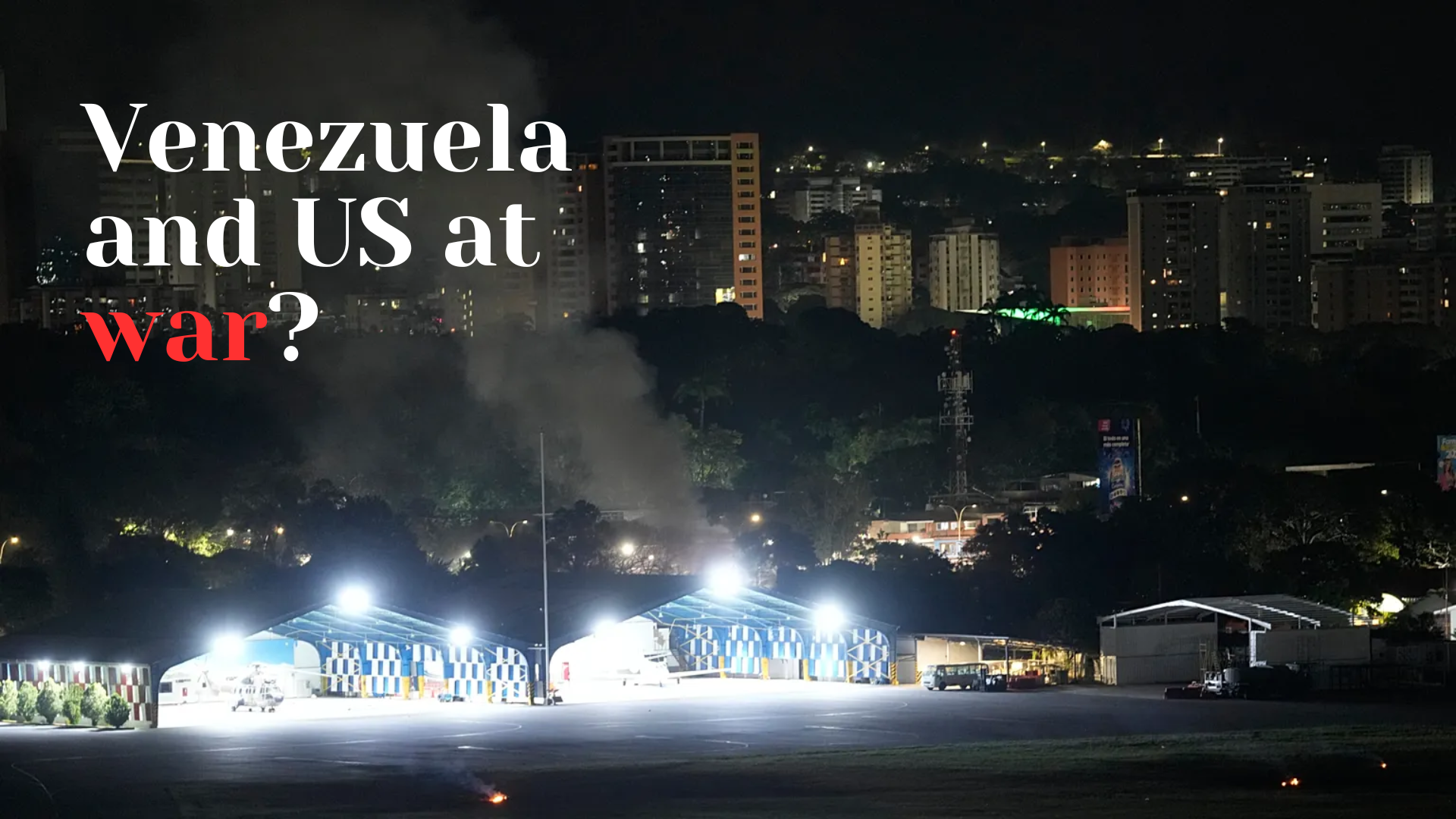
In early January 2026, Venezuela became the focus of international attention as reports emerged of unusual military activity in the country’s capital, Caracas. The situation has drawn widespread interest due to the combination of reported explosions, aerial activity, and statements by international leaders. While details are still emerging, the developments have sparked global discussion about Venezuela’s current political and security landscape.
Reports from Caracas
Residents in Caracas reported hearing multiple explosions early in the morning. Witnesses described seeing black smoke rising from different parts of the city, accompanied by the sound of aircraft overhead. Some neighborhoods experienced temporary disruptions in electricity, and social media accounts captured the confusion and concern among local communities.
Low-flying aircraft and unusual movement of vehicles across the city were noted by residents. These observations fueled questions about the cause and intent of the activity, as Caracas has generally not experienced large-scale public military movements in recent years.
Statements from U.S. Leadership
In parallel with the events in Caracas, statements from U.S. leadership claimed that the United States had conducted operations in Venezuela. Reports suggested that Venezuelan President Nicolás Maduro and other senior officials were detained or removed from key positions. These claims have drawn immediate attention due to the rarity of such statements from international leaders regarding a foreign government, especially in real time.
The assertions have not been independently verified in full, and officials emphasized that the situation is still unfolding. Analysts caution that early reports may change as further information becomes available, making careful observation critical.
Venezuelan Government Response
In response to the reported activity, the Venezuelan government strongly rejected the claims of foreign intervention and described the events as an act of aggression. The administration declared a state of emergency, urging citizens to remain calm while emphasizing the country’s sovereignty and the need to safeguard national institutions.
Government officials stated that security forces were actively monitoring and responding to the situation. Public communication emphasized unity and resilience, encouraging residents to rely on official updates while avoiding unverified information circulating in social media.
Regional and Global Context
Venezuela’s current situation occurs against a backdrop of longstanding tensions with international actors, particularly regarding sanctions, trade policies, and energy exports. Over the past few years, diplomatic relations have fluctuated, with occasional warnings and public statements about national security and border issues.
The recent activity in Caracas is being interpreted within this broader geopolitical context. Observers note that while the events are serious, they are part of a complex set of regional dynamics that include historical relationships, economic pressures, and strategic considerations.
Media and Public Reaction
The news quickly gained traction both regionally and internationally. Media outlets have reported on the situation with varying emphasis, focusing on eyewitness accounts, government statements, and political reactions. Social media users shared videos and commentary, reflecting both concern and curiosity among the public.
Experts caution that early reports can be incomplete or misinterpreted. Therefore, it is important to rely on verified information and avoid drawing premature conclusions about the broader implications of the events.
Impact on Daily Life
While the immediate situation generated concern, residents reported that life in Caracas continued with adaptations. Some schools and businesses temporarily adjusted schedules, and local transportation experienced minor disruptions. Community networks and local communication channels played an important role in keeping people informed and maintaining social order.
These responses highlight the resilience and adaptability of Venezuelan communities, which have historically faced periods of economic and social uncertainty. Local initiatives often mitigate the impact of sudden disruptions, ensuring that essential services and daily routines continue.
Broader Implications
At this stage, the full consequences of the recent events remain unclear. Analysts point out that Venezuela’s government and institutions have mechanisms to respond to security threats, and that the country’s economic and social systems are structured to absorb disruptions without immediate collapse.
The situation also underscores the importance of measured reporting and cautious interpretation. Rapid developments in Caracas are likely to continue generating media attention, but definitive conclusions about long-term impacts will require time and verification.
Understanding the Trends
Several factors explain why Venezuela is trending globally:
- Unusual Activity in the Capital: The combination of explosions, aircraft movement, and visible disruption is rare in Caracas and draws immediate public interest.
- Statements by International Leaders: Claims about the capture or removal of senior officials amplify attention, given the high stakes and sensitivity involved in international relations.
- Geopolitical Context: Venezuela’s history of economic and diplomatic interactions with neighboring countries and global powers frames the current developments in a broader narrative.
- Rapidly Evolving Information: Continuous updates, eyewitness reports, and government statements create a dynamic story, fueling curiosity and discussion worldwide.
Neutral Perspective
It is important to view these developments with caution. Many reports are preliminary, and multiple aspects of the situation are still unclear. While it is reasonable to monitor events closely, speculation about outcomes or motivations can be misleading. A balanced perspective emphasizes verified facts, the historical context, and the measured responses of local and international actors.
Cultural and Social Resilience
Beyond the immediate news, Venezuela’s ongoing social and cultural life continues. Communities maintain traditions, music, and celebrations, demonstrating continuity even amid challenges. This resilience is a key feature of Venezuelan society, reflecting the capacity to adapt to changing circumstances while maintaining cultural identity.
Similarly, migration and the Venezuelan diaspora continue to play a role in shaping perceptions of the country internationally. Venezuelans abroad often maintain strong connections to family and community at home, contributing to economic support and cultural exchange.
Looking Forward
As events in Venezuela develop, observers and analysts are likely to focus on several areas: security in Caracas, government responses, economic implications, and regional diplomatic effects. The situation is evolving, and updates will continue to shape public understanding.
While the current events are notable, it is crucial to frame them within Venezuela’s broader social, economic, and historical context. Doing so allows for a clearer, more accurate view of the country, emphasizing both the challenges and the resilience that define its national character.