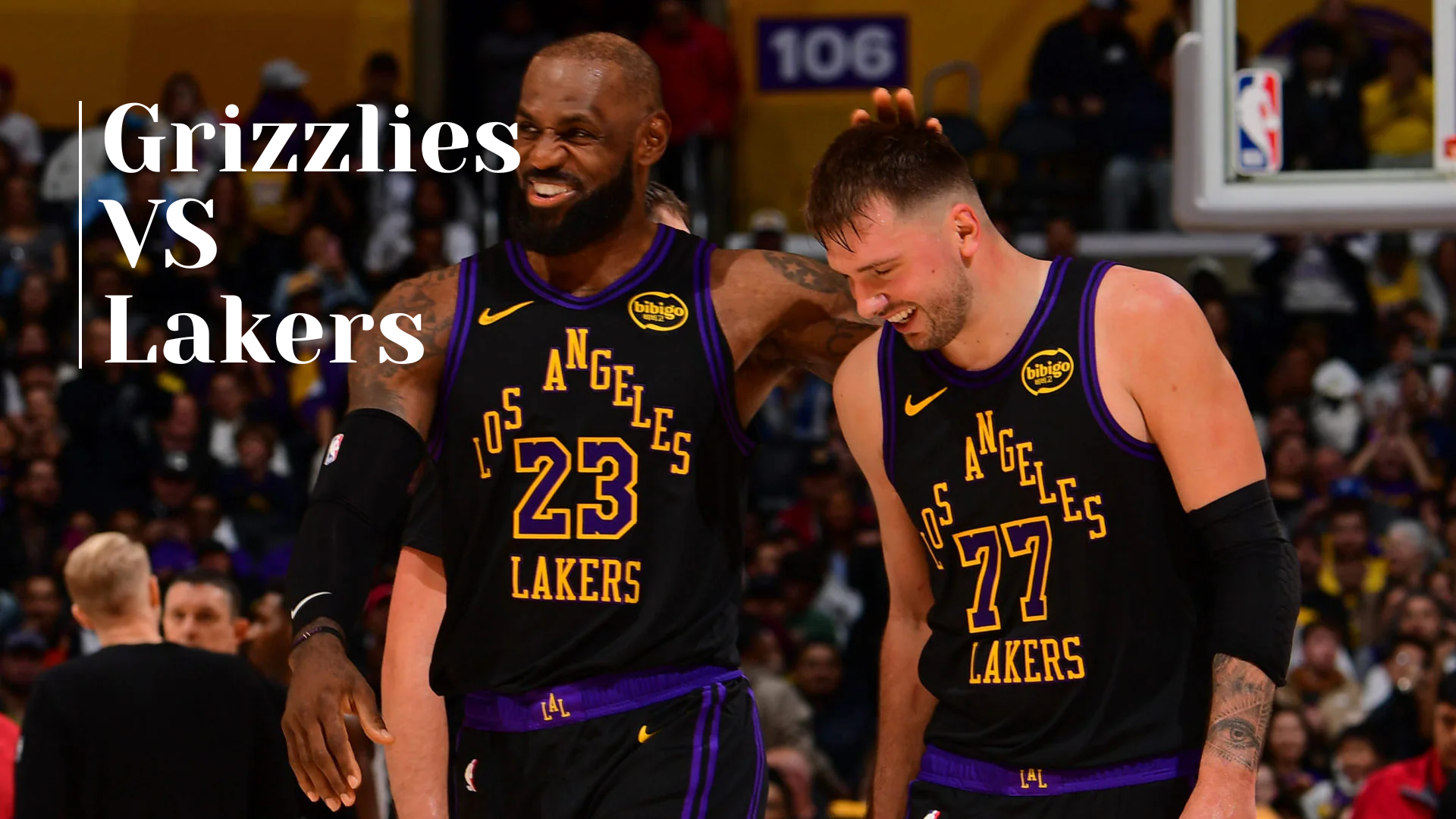
Los Angeles — The Los Angeles Lakers secured a hard-fought 128‑121 victory over the Memphis Grizzlies in a Western Conference matchup that highlighted both the intensity and unpredictability of the 2025‑26 NBA season. Played at the Crypto.com Arena, the game showcased star power, depth contributions, and dramatic momentum swings that kept fans on edge until the final buzzer.
Early Dominance by the Lakers
From the opening tip, the Lakers established themselves as the more aggressive team. Using sharp ball movement, precise perimeter shooting, and strong interior play, Los Angeles jumped to an early lead. The team capitalized on turnovers and defensive lapses by the Grizzlies, forcing Memphis to play catch-up throughout the first quarter.
Luka Dončić and LeBron James, both central to the Lakers’ offensive strategy, orchestrated the early scoring. Dončić’s accuracy from mid-range and beyond the arc kept the Grizzlies’ defense on their heels, while James’ versatility in driving to the basket and facilitating for teammates created open shots across the floor.
Memphis Responds
Despite the early deficit, the Grizzlies demonstrated resilience. Key players like Jaren Jackson Jr. and Ja Morant helped Memphis regain momentum in the second quarter. Jackson Jr. showcased his scoring versatility, converting both inside plays and long-range jumpers. Morant contributed with sharp passing and quick drives to the basket, orchestrating several effective fast breaks.
Memphis managed to close the gap, cutting the Lakers’ lead to just a few points by halftime. Their defense became more disciplined, limiting second-chance points and forcing contested shots from Los Angeles. This adjustment highlighted the Grizzlies’ ability to respond to adversity, even while missing several contributors due to injuries or rest.
Pivotal Third Quarter
The third quarter was marked by multiple lead changes, with the Lakers and Grizzlies exchanging runs. Memphis briefly took the lead after a sequence of three-pointers and fast-break conversions. However, Los Angeles’ depth proved crucial. Bench players contributed key baskets and rebounds, allowing Dončić and James to stay fresh for the decisive final quarter.
Momentum swung several times, and the game’s tension was evident in the crowd’s reactions. Both teams played at a high pace, with emphasis on transition scoring and aggressive drives to the basket. This quarter demonstrated the competitive balance of the matchup, reflecting why both teams are considered strong Western Conference contenders.
Fourth Quarter Surge
In the final quarter, the Lakers’ star duo took control. Dončić and James combined for a 12‑2 run that re-established a comfortable lead for Los Angeles. Their ability to read defensive rotations, make timely passes, and convert clutch shots helped the Lakers withstand the Grizzlies’ late rally attempts.
Supporting players, including younger and role players, contributed crucial rebounds, defensive stops, and timely baskets. Their efforts allowed the Lakers to maintain momentum and ultimately secure the 128‑121 win. The fourth quarter highlighted the importance of experience, composure, and execution under pressure in tight games.
Player Performances
- Luka Dončić finished with 34 points, 8 assists, and 6 rebounds, orchestrating much of the Lakers’ offense and taking over key possessions in the fourth quarter.
- LeBron James contributed 31 points, 9 rebounds, and 6 assists, showing his trademark leadership and versatility.
- Jake LaRavia, coming off the bench, added 21 points and 9 rebounds, demonstrating his growing role in the Lakers’ rotation.
For the Grizzlies:
- Jaren Jackson Jr. led the team with 25 points, showing efficiency both inside and from distance.
- Ja Morant recorded 16 points and 11 assists, effectively facilitating the offense even as the team fought to overcome early setbacks.
- Kentavious Caldwell-Pope contributed 20 points, including crucial perimeter shooting to keep Memphis competitive throughout the game.
Implications for the Season
The win improved the Lakers’ standing in the Western Conference, keeping them in contention for favorable playoff positioning. The game also highlighted their reliance on veteran leadership paired with emerging role players, a combination that has been a recurring theme in their season.
For the Grizzlies, the loss underlined the challenges of maintaining consistency when key players are unavailable. Nonetheless, the team’s resilience, particularly in the third quarter, indicates that they remain a threat when healthy. Their performance provided insights into areas for improvement, such as closing out games and defensive adjustments in crunch time.
Team Dynamics and Strategy
Both teams displayed distinct approaches. The Lakers relied heavily on star-led offense, precision shooting, and rotational depth, while the Grizzlies emphasized speed, transition play, and opportunistic scoring. These contrasting styles contributed to the back-and-forth nature of the game, keeping fans engaged and highlighting each team’s strengths and weaknesses.
The matchup also served as a reminder of the importance of adaptability. Los Angeles adjusted to the Grizzlies’ runs by utilizing bench scoring and exploiting mismatches, while Memphis relied on speed and quick decision-making to counter the Lakers’ structured offense.
Looking Ahead
The Lakers and Grizzlies are scheduled to meet again later in the season, providing another opportunity to refine strategies and build upon lessons learned from this contest. Both teams will need to manage injuries, maintain consistency, and continue developing cohesion if they aim to make deep playoff runs.
For fans, games like this showcase the excitement of NBA basketball: lead changes, star performances, and contributions from unexpected players create a complete viewing experience. As the season progresses, matchups between teams of similar talent and competitive spirit are likely to continue shaping the Western Conference landscape.
The Lakers’ 128‑121 victory over the Grizzlies was more than just a win on the scoreboard. It reflected tactical adjustments, the impact of star leadership, and the contributions of supporting players. Memphis demonstrated grit and competitiveness, making the contest compelling and underscoring their potential when at full strength.
This game illustrates why the Western Conference remains one of the most competitive in the NBA and highlights the qualities that teams need to succeed: experience, adaptability, and depth. Both Los Angeles and Memphis will look to build on this performance as the season continues, with fans eagerly anticipating their next encounter.