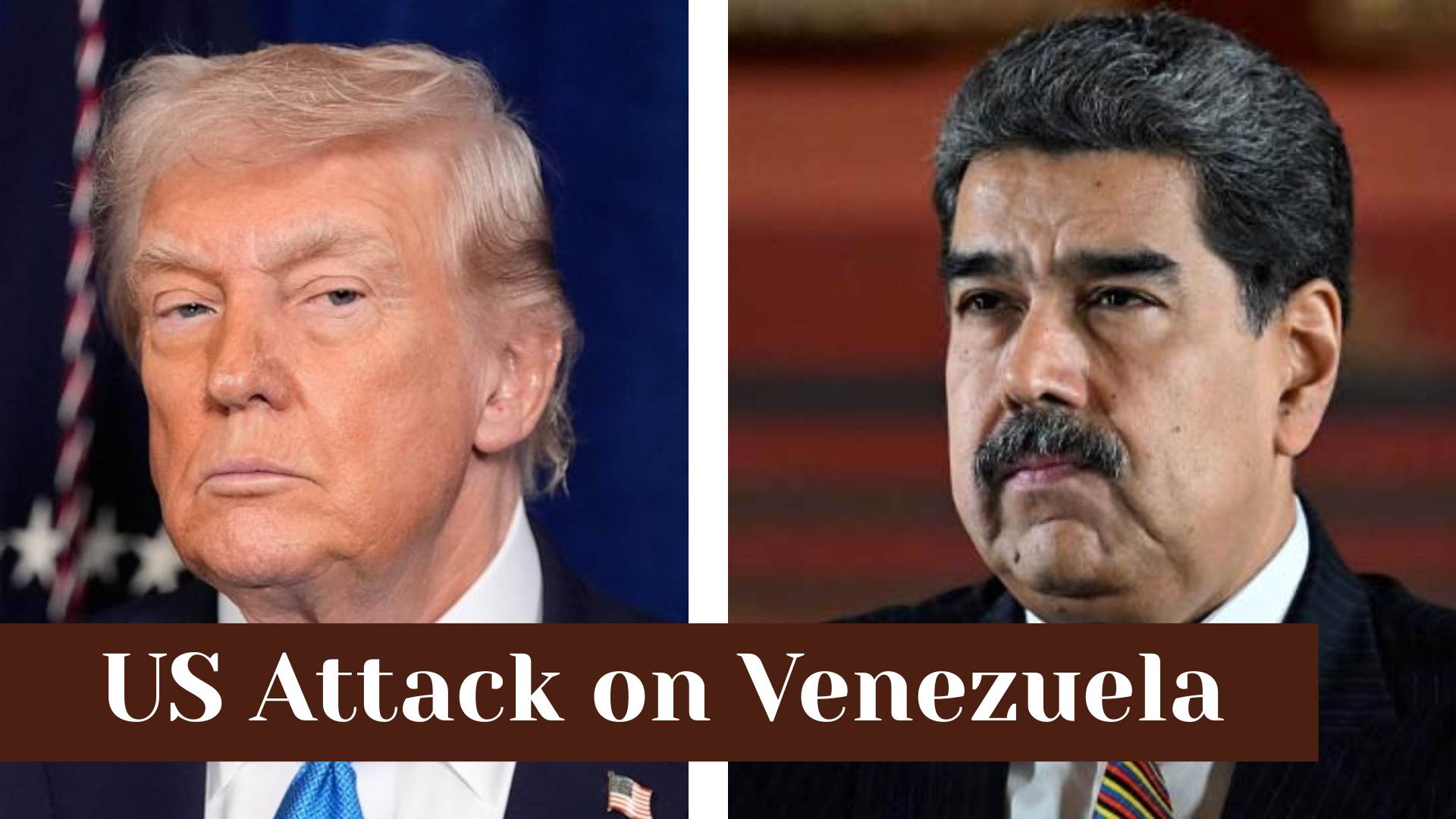
On January 3, 2026, a dramatic and unprecedented series of events unfolded between the United States and Venezuela that captured global attention and sparked intense discussion among governments, analysts, and the public. In the early hours of that day, reports emerged of explosions and aircraft over Caracas, the capital city of Venezuela, marking a dramatic escalation in tensions that had been building for months. In a public announcement later that morning, U.S. leadership stated that the United States military had carried out a large‑scale operation in Venezuela, during which Venezuelan President Nicolás Maduro and his wife, Cilia Flores, were captured by U.S. forces and transported out of the country for legal proceedings in the United States. These developments have been referred to collectively as Operation Absolute Resolve, and they represent one of the most significant and direct interactions between U.S. military forces and a sovereign Latin American country in decades.
According to official documentation of the event, Operation Absolute Resolve began around 2:00 a.m. local Venezuelan time when the United States launched a series of coordinated airstrikes on multiple targets across northern Venezuela, including areas within and around Caracas. The strikes involved a substantial number of aircraft and were intended to neutralize air defenses and key military positions, creating conditions for a rapid follow‑on action by special operations forces to apprehend key individuals. Venezuelan authorities responded by declaring a state of emergency, describing the action as a serious violation of their sovereignty and condemning what they described as a military aggression.
In brief statements issued by the U.S. administration, it was announced that President Maduro and Cilia Flores were seized in Caracas by U.S. special forces and subsequently taken aboard the U.S. amphibious assault ship USS Iwo Jima. This vessel, a large amphibious platform capable of supporting aircraft and helicopter operations, had been operating in the Caribbean prior to the incident and served as a staging point for initial custody arrangements before Maduro and Flores were transported to the United States. The Iwo Jima is designed to support a range of military and logistical tasks, including ship‑to‑shore movement and aviation access, and its presence in the region reflected ongoing U.S. naval activity near Venezuelan maritime territory.
The capture of Maduro and his wife and their relocation to the United States were framed by U.S. officials as part of longstanding domestic criminal charges linked to narcotics trafficking and related offenses. In the United States, an indictment from 2020 had alleged Narco‑terrorism, cocaine importation conspiracy, and related criminal conduct, and those charges were cited as the legal basis for the operation. Maduro and Flores were flown by military aircraft to New York, where they were expected to face arraignment in federal court and formal proceedings. U.S. officials maintained that no American fatalities occurred during the operation, though some U.S. service members were reported to have sustained non‑life‑threatening injuries.
The scope and nature of these events have drawn comparisons to past military interventions, such as the U.S. operation in Panama in 1989 that resulted in the capture of General Manuel Noriega. In both cases, the United States executed a military action that had legal and political implications beyond traditional battlefield engagements. In this latest instance, however, the capture of a sitting head of state and his transfer to U.S. soil for prosecution has triggered significant discussion about legal authority, international norms, and the future of Venezuelan governance.
Within Venezuela, the immediate political response was swift. Vice President Delcy Rodríguez, under constitutional provisions that provide for succession in the event of a presidential vacancy, was declared acting president by the Venezuelan government. Rodríguez publicly rejected the characterization of Maduro’s removal as legitimate and demanded proof of his life, emphasizing that she considered Maduro to remain the country’s rightful leader. She called for calm and unity among citizens and mobilization in defense of Venezuelan sovereignty. National institutions were called upon to resist what was described by Venezuelan authorities as an imperialist action and a violation of international law.
International reactions have varied significantly. Some governments and international organizations have expressed deep concern about the use of military force against a sovereign nation and have emphasized the importance of adhering to international law and the United Nations Charter. Officials at the United Nations noted that the events might set a worrying precedent if actions of this kind become normalized, and consultations among Security Council members were anticipated to address the unfolding situation. Several nations, including those with longstanding diplomatic ties to Venezuela, strongly condemned the strikes and capture, describing them as violations of the principle of sovereign equality among states. Other governments called for restraint and heightened diplomatic engagement to prevent further escalation. There were also world leaders who supported the emphasis on enforcing domestic criminal law against alleged transnational criminal activity, though such support was often accompanied by calls for peaceful resolution and respect for multilateral norms.
The broader context for these dramatic developments includes months of rising tensions between the United States and Venezuela prior to January 2026. Throughout the latter half of 2025, U.S. forces conducted a series of operations in the Caribbean, including strikes against vessels and other maritime targets that Washington officials described as linked to drug trafficking networks. These actions were part of what some U.S. policymakers framed as an intensified effort to target illegal narcotics operations and to apply pressure on the Venezuelan government, which the United States had criticized for alleged corruption and involvement in illicit activities. Naval deployments in the region, including the presence of amphibious ships and maritime patrols, reflected a posture of readiness that preceded the January 3 operation.
Beyond the immediate military and legal elements, the situation has raised complex questions about regional stability, humanitarian concerns, and economic effects. Venezuela is home to some of the largest proven oil reserves in the world, and its energy industry has been a central feature of its national economy. Statements by U.S. officials following the operation suggested that American oil companies might play a role in revitalizing Venezuela’s oil infrastructure under a transitional arrangement, though the specifics of how this might occur were not immediately clear. This focus on energy resources adds another layer of complexity to an already sensitive set of developments, as economic interests intersect with legal and diplomatic considerations.
In Caracas and other parts of Venezuela, the civilian population has experienced a mix of reactions. News reports and firsthand accounts reflect a range of emotions, from shock at the scale of the overnight events to concern about the direction of the country’s future governance. Some Venezuelans have expressed support for efforts to hold leaders accountable for alleged criminal conduct, while others have denounced the use of military force and emphasized the importance of national sovereignty. These differing perspectives highlight the diversity of opinion within Venezuela itself and the difficulty of achieving broad consensus in times of rapid change.
The reported involvement of elite U.S. military units such as Army special operations forces in the raid has drawn attention to the precision and coordination required for a mission of this nature. According to defense officials, months of planning contributed to the operation’s execution, and careful timing was necessary to achieve the element of surprise. While some details remain subject to further verification, the rapid sequence of strikes and the subsequent capture of high‑profile individuals illustrate the logistical and command challenges inherent in such missions.
Looking forward, the situation remains fluid. The legal process for Maduro and Flores in U.S. courts will unfold over the coming weeks and months, and questions about Venezuela’s governance, economic recovery, and international relations will continue to evolve. Diplomatic efforts to address immediate tensions and prevent further instability are expected to involve multiple international actors, including regional organizations, neighboring states, and bodies such as the United Nations. Analysts suggest that the long‑term implications of the January 3 events will depend on how both Venezuelan authorities and global partners navigate these complex political, legal, and social dynamics.
In summary, the recent U.S. military operation in Venezuela, the capture of President Nicolás Maduro and his wife, and the involvement of a major naval asset like the USS Iwo Jima represent a major moment in international affairs. Coming after months of rising tensions and pressure, these events have not only reshaped headlines but also raised fundamental questions about sovereignty, law, and the role of military force in addressing criminal allegations against foreign leaders, and how nations balance domestic legal imperatives with respect for international norms.