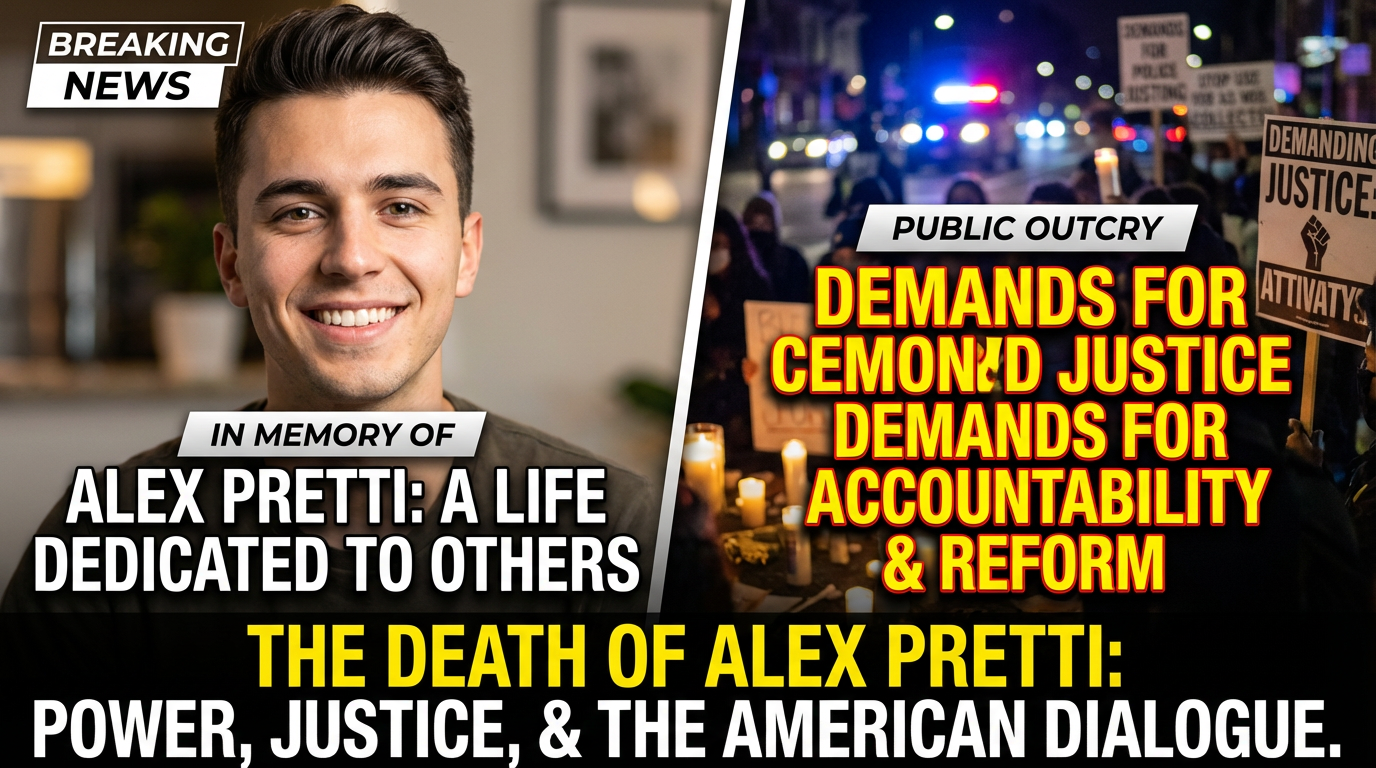
Alex Pretti, a 37‑year‑old intensive care nurse in Minneapolis, became the focus of national attention after he was fatally shot by a federal law enforcement officer on Saturday, January 24, 2026, during a tense immigration enforcement operation in the city. The circumstances surrounding his death have sparked public outrage, protests, political debate, and calls for transparency as people seek answers about what happened and why. Pretti’s life, character, and the events leading up to the shooting reveal a complex story that touches on issues of law enforcement conduct, civil rights, community activism, and public safety amid broader national concerns about immigration policy and federal agent deployments.
At the time of his death, Alex Jeffrey Pretti was a registered nurse working in the intensive care unit at the Minneapolis Veterans Affairs Health Care System, where he cared for veterans with serious health conditions. Colleagues remembered him as kind, dedicated, compassionate, and deeply committed to his work with some describing him as calm, helpful, and well‑respected among his peers. Friends and coworkers recalled his energy and his willingness to help others in need, qualities they say he carried both inside and outside the hospital.
Pretti’s path to healthcare began well before his final public moments. He grew up in the Midwest and pursued education in biology, society, and the environment, earning a bachelor’s degree before eventually becoming a registered nurse. Prior to his career as a nurse, he worked as a research scientist and later returned to school to transition into nursing. His life outside of work reflected a variety of interests: he was an avid outdoorsman, passionate about bicycle racing and nature, and cared deeply about environmental and social issues. Friends and family noted his engagement with causes he believed in and described him as a person who wanted to make a difference in the world.
On the morning of January 24, 2026, a federal operation involving Immigration and Customs Enforcement and the Department of Homeland Security unfolded in Minneapolis amid heightened enforcement activity in the city. According to law enforcement officials, the shooting occurred when Pretti allegedly approached agents with a firearm. The Department of Homeland Security characterized the incident as involving defensive shots against an individual believed to have posed a threat. Local authorities noted that Pretti was a lawful gun owner with a valid permit to carry a concealed firearm, but they did not provide definitive public evidence of how the interaction progressed in its initial moments.
Eyewitness videos shared widely on social media and by bystanders show a chaotic scene involving Pretti and federal agents. Some footage appears to show Pretti being wrestled to the ground by multiple agents and then shot at close range after being subdued. In other clips, Pretti can be seen shielding or aiding another person who had been pushed to the ground by an agent, with chemical agents used against them before the fatal shots were fired. These videos have raised questions about the exact sequence of events, the necessity of the use of deadly force, and the role of federal officers in crowd control during the incident.
Family members, including Pretti’s parents, have strongly disputed official accounts that portray him as a threat. His parents said he had no significant criminal history, emphasizing that his only interactions with law enforcement previously were minor traffic tickets. They described him as a loving, kind, and service‑oriented individual who had never exhibited violent tendencies. The family maintains that Pretti was unarmed at the time of his death, pointing to video footage that shows him holding only a phone and trying to assist others during the confrontation. They have called for clarity, transparency, and accountability in how the incident unfolded and questioned statements made by federal authorities.
The tragic shooting has sparked protests in Minneapolis and beyond, with demonstrators condemning federal enforcement tactics and expressing deep anger and grief over Pretti’s death. Community leaders and residents have called for justice, independent investigations, and changes in how federal agencies operate during domestic law enforcement actions. Minneapolis’s mayor publicly urged calm while also demanding a reevaluation of federal agent presence in the city, and local law enforcement has been involved in managing growing tensions on the streets. Supporters of Pretti have organized vigils, marches, and public statements honoring his life and service, painting him as a caring caregiver whose loss resonated widely.
The broader context of immigration enforcement operations in Minneapolis has added layers of controversy surrounding Pretti’s death. Earlier in January, another fatal shooting by a federal agent had already sparked outrage and heightened scrutiny of the role of Immigration and Customs Enforcement in urban settings far from international borders. These incidents have led to intense political debate, public demonstrations, and national commentary on use‑of‑force policies, federal authority, and civil liberties. Residents, activists, and legal experts have all weighed in, with some demanding policy reforms and others calling for deeper community engagement to address underlying tensions.
Colleagues and friends from the Minneapolis VA hospital have remembered Pretti as a devoted healthcare professional who cared deeply for his patients, particularly veterans with serious and complex health needs. A physician who worked alongside Pretti described him as someone who brought empathy, competence, and positivity to his role, always greeting people with warmth and a willingness to help. His dedication to patient care, especially in an intensive care setting where the stakes are high and emotions run deep, underscored his commitment to improving the lives of others.
Beyond his career, Pretti’s life reflected a range of personal passions. He enjoyed outdoor activities, competitive cycling, and spending time in nature. He was known for his kindness and generosity, attributes that endeared him to neighbors and community members who remembered him as a quietly impactful presence in their lives. His death, sudden and violent, has prompted those who knew him to share stories of his character, emphasizing his deep care for others and his desire to make a positive difference in the world.
In the wake of Alex Pretti’s death, debates over federal law enforcement practices, civil liberties, and public safety continue to evolve. Calls for independent investigations, transparent reporting, and policy reform have gained momentum, while communities mourn and seek answers about how a man dedicated to helping others ended up dead in a public street. Pretti’s story has become emblematic of larger tensions within American society — tensions over power, accountability, justice, and the role of citizens and public servants alike. As public dialogue unfolds and authorities respond, the legacy of Alex Pretti’s life and death is likely to shape discussions about policing, protest, and the responsibilities of those sworn to protect the public for months and years to come.