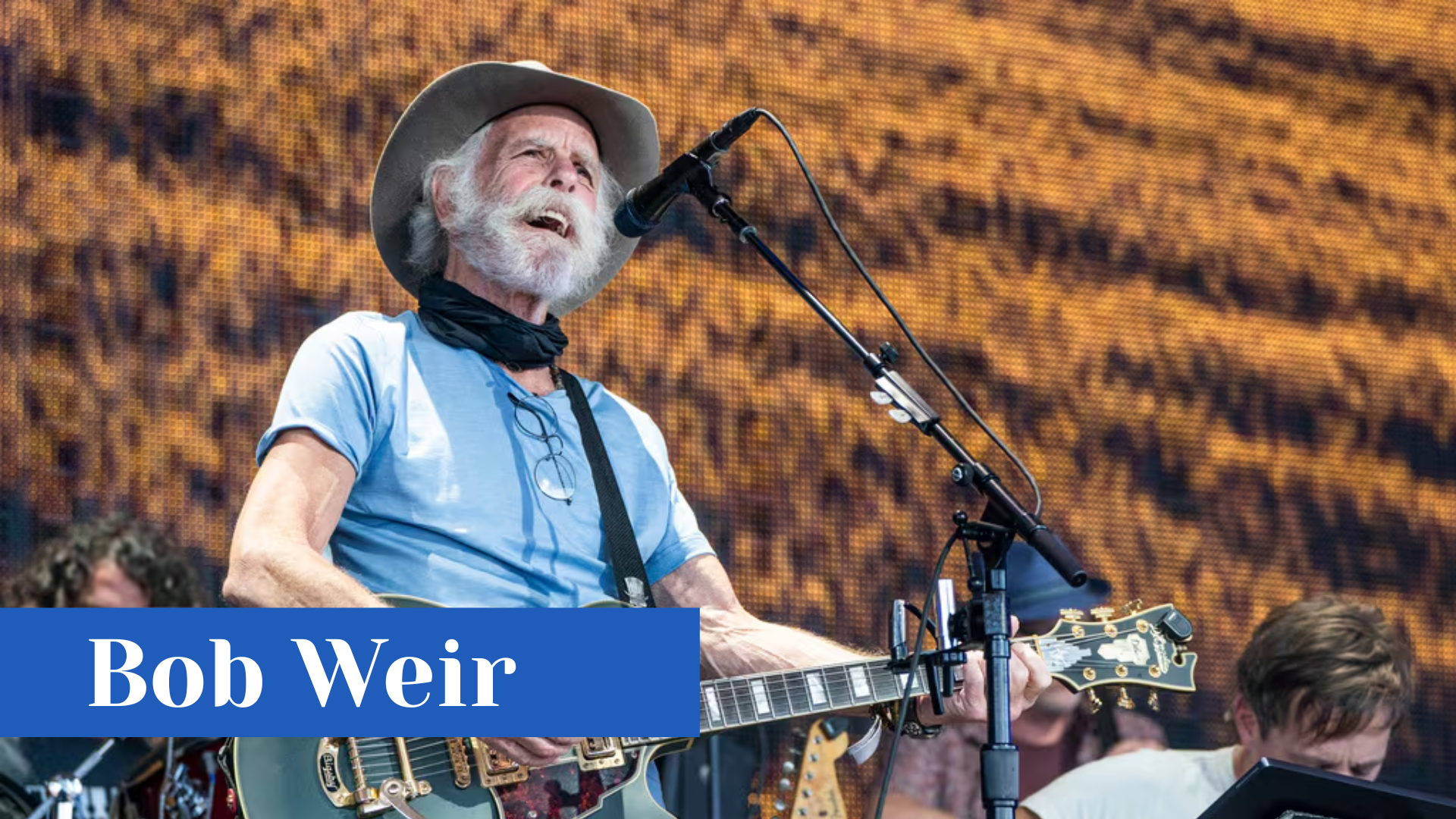
Bob Weir is widely regarded as one of the most influential and enduring figures in American rock music. Best known as a founding member of the legendary band the Grateful Dead, Weir’s career spans more than six decades, making him a living bridge between the countercultural movement of the 1960s and the evolving music landscape of the modern era. His work as a guitarist, songwriter, and performer has shaped not only a genre but an entire musical philosophy centered on freedom, improvisation, and connection with audiences.
Born in San Francisco, Bob Weir grew up during a time when rock and folk music were rapidly evolving. His early exposure to rhythm and blues, folk traditions, and emerging rock sounds helped define his unique musical approach. When he co-founded the Grateful Dead in the mid 1960s, Weir was still a teenager, yet his musical instincts and creative curiosity quickly made him an essential part of the band’s identity. Unlike many rock guitarists of the era, Weir focused on rhythm patterns that were complex, fluid, and deeply intertwined with the band’s improvisational structure.
One of Bob Weir’s most defining traits is his unconventional guitar style. Rather than relying on traditional chord progressions, he often played fragmented rhythms, unexpected accents, and syncopated patterns that complemented the lead guitar and bass rather than competing with them. This approach helped create the signature Grateful Dead sound, where each instrument occupied its own space while contributing to a constantly shifting musical conversation. Music scholars and guitarists alike continue to study Weir’s playing for its originality and depth.
As a songwriter, Bob Weir brought a distinctive voice to the band’s catalog. His lyrics often explored themes of American folklore, wanderlust, morality, and human experience. Songs like those centered on storytelling and character-driven narratives reflected a deep appreciation for traditional American music while pushing it into new creative territory. Weir’s collaborations with lyricists resulted in compositions that felt timeless, blending poetic imagery with melodies that invited interpretation and emotional engagement.
Beyond the studio, Bob Weir’s reputation was built on live performance. The Grateful Dead became famous for concerts that were never the same twice, and Weir was central to that experience. His ability to respond in real time to fellow musicians and to the energy of the audience helped transform concerts into communal events rather than simple performances. Fans did not attend shows merely to hear familiar songs, but to witness a unique musical journey unfold in the moment.
After the passing of key band members and the eventual conclusion of the Grateful Dead as an active touring group, Bob Weir did not retreat from the music world. Instead, he continued to evolve, forming new bands and collaborating with musicians from different generations. These projects demonstrated his willingness to adapt while staying true to the improvisational spirit that defined his earlier work. His later performances showed a maturity and reflection that resonated deeply with longtime fans and newcomers alike.
Bob Weir’s influence extends far beyond his own recordings and performances. Countless musicians cite him as an inspiration, particularly those interested in blending rock with jazz, folk, and experimental forms. His emphasis on musical conversation rather than technical showmanship challenged traditional ideas of what a rock guitarist should be. In doing so, he helped open the door for more exploratory and collaborative approaches to popular music.
Another key aspect of Bob Weir’s legacy is his commitment to social and environmental causes. Over the years, he has used his platform to advocate for environmental awareness, sustainable living, and community engagement. This activism aligns closely with the values that emerged from the counterculture movement, reinforcing his image as an artist whose concerns extend beyond the stage. His efforts have helped connect music with broader conversations about responsibility and collective action.
In recent years, Bob Weir has continued to tour and perform, proving that creativity does not diminish with age. His performances reflect decades of experience, offering a sense of history while remaining vibrant and relevant. Audiences often describe his shows as both nostalgic and forward-looking, a rare balance that few artists achieve. This ability to honor the past while embracing the present is a defining feature of his career.
From a broader cultural perspective, Bob Weir represents an era when music was deeply intertwined with social change and personal exploration. His work helped shape a community of listeners who valued openness, curiosity, and shared experience. Even today, the culture surrounding his music remains active, with fans continuing to celebrate the values that his career embodies. This enduring connection speaks to the authenticity and emotional power of his artistry.
In conclusion, Bob Weir’s impact on music cannot be measured solely by chart success or commercial metrics. His true legacy lies in the way he redefined the role of a musician, emphasizing exploration, collaboration, and authenticity. As a guitarist, songwriter, and cultural figure, he continues to inspire generations of artists and listeners. Bob Weir stands as a testament to the power of music to evolve, endure, and bring people together across time.