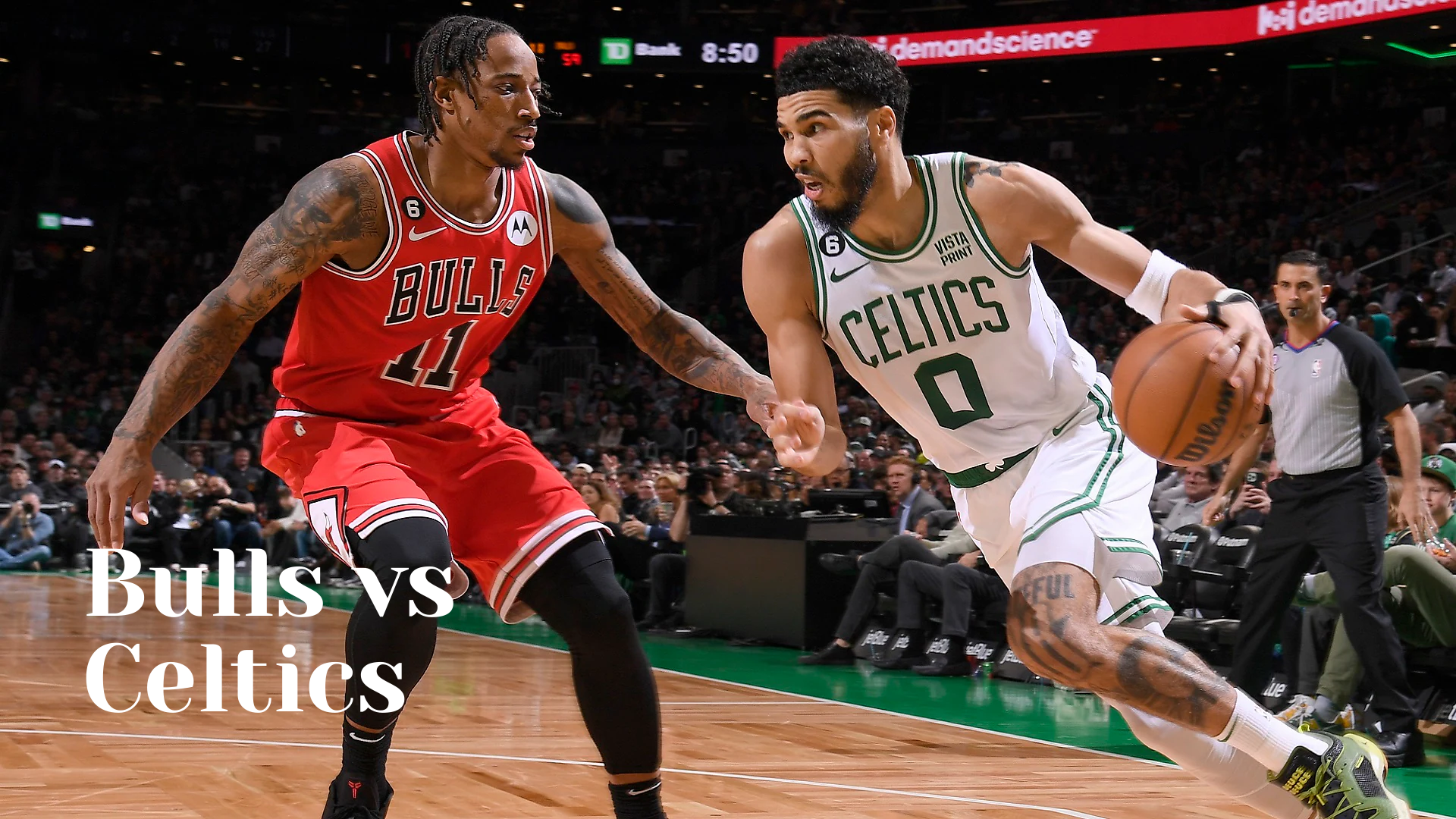
Chicago, Illinois — In a game that showcased grit, strategy, and high-level talent, the Chicago Bulls fell to the Boston Celtics 114‑107 at the United Center, delivering a contest that kept fans engaged until the final minutes. Both teams entered the matchup with playoff positioning on the line, and from the opening tip, it was evident that the clash would hinge on execution in critical moments and depth across the roster.
The Celtics, under the guidance of coach Joe Mazzulla, aimed to consolidate their standing among the Eastern Conference elite. Boston relied on the versatile scoring of Jayson Tatum and the all-around contributions of Jaylen Brown, blending perimeter shooting with defensive intensity. The Bulls, led by Zach LaVine and Nikola Vučević, sought to exploit their athleticism and home-court advantage to challenge a team widely regarded as one of the strongest in the East.
First Quarter: Fast Start from Boston
Boston came out aggressively, with Tatum establishing early dominance on both ends of the floor. He combined perimeter shooting with drives to the basket, drawing defensive attention and opening opportunities for Brown and Al Horford. Jaylen Brown contributed with mid-range jumpers and transition plays, giving the Celtics an early 11‑point advantage.
The Bulls responded with athleticism and energy. Zach LaVine pushed the pace, creating open lanes and hitting perimeter shots to keep Chicago within reach. Nikola Vučević added a presence in the paint, scoring efficiently on post moves and second-chance opportunities. By the end of the first quarter, Boston maintained a 32‑27 lead, reflecting their control while highlighting Chicago’s ability to stay competitive.
Second Quarter: Bulls Fight Back
Chicago began to find rhythm in the second quarter. The Bulls’ perimeter shooting improved, with Lonzo Ball facilitating ball movement and creating scoring opportunities for teammates. Vučević dominated the boards, grabbing offensive rebounds that extended possessions, while DeMar DeRozan added mid-range scoring, keeping the Bulls close.
Boston maintained composure, with Tatum continuing to lead the offensive charge. Brown’s defensive plays disrupted Chicago’s rhythm, including several key steals leading to fast-break points. Despite Boston’s discipline, the Bulls chipped away at the lead, and by halftime, the score was 58‑56 in favor of the Celtics — a testament to the back-and-forth nature of the contest.
Third Quarter: Back-and-Forth Momentum
The third quarter highlighted the physicality and resilience of both teams. Chicago took brief leads thanks to LaVine’s quick drives and Vučević’s scoring in the paint, but Boston responded with disciplined ball movement and efficient shooting. Marcus Smart contributed both offensively and defensively, controlling tempo and creating opportunities for open shooters.
Both teams exchanged leads multiple times, with neither able to break away. The quarter ended with Boston slightly ahead, 87‑84, demonstrating the evenly matched nature of the game and setting up an intense fourth quarter.
Fourth Quarter: Boston Holds Firm
In the fourth, execution and composure became critical. The Celtics leaned on Tatum and Brown to create spacing and scoring opportunities, while Horford and Smart anchored defensive rotations. Key stops on LaVine limited Chicago’s ability to convert fast breaks and forced difficult mid-range shots.
Chicago fought hard, with Vučević scoring efficiently and LaVine hitting contested jumpers. However, Boston’s bench provided timely contributions, including scoring from Derrick White and Robert Williams III, who helped maintain momentum and secure rebounds. With three minutes remaining, the Celtics built a seven-point lead that proved decisive.
Despite late pressure from the Bulls, including a couple of successful three-pointers from Coby White, the Celtics maintained composure, sealing a 114‑107 victory. Their ability to control pace, execute in critical moments, and leverage depth highlighted why they are considered a top-tier Eastern Conference team.
Standout Performances
Boston Celtics
- Jayson Tatum: 30 points, 7 rebounds, 5 assists. Consistent scoring and leadership throughout the game.
- Jaylen Brown: 24 points, 6 rebounds, 3 assists. Balanced offensive and defensive contributions.
- Marcus Smart: 12 points, 5 rebounds, 8 assists. Controlled tempo and created opportunities for teammates.
- Robert Williams III: 9 points, 12 rebounds, 3 blocks. Anchored interior defense and provided critical rim protection.
Chicago Bulls
- Zach LaVine: 28 points, 4 rebounds, 5 assists. Aggressive drives and mid-range shooting kept Chicago competitive.
- Nikola Vučević: 22 points, 13 rebounds. Dominant on the boards and efficient scoring inside.
- DeMar DeRozan: 17 points, 6 assists. Provided steady scoring and veteran presence.
- Lonzo Ball: 10 points, 8 assists. Facilitated offense and contributed on defense.
Tactical Takeaways
Boston’s victory hinged on defensive adjustments and bench contributions. Limiting LaVine’s drives in the fourth quarter and using Smart to control tempo disrupted Chicago’s rhythm. Tatum and Brown’s spacing created high-efficiency scoring opportunities, and interior defense by Robert Williams III reduced second-chance points.
Chicago demonstrated strong effort and depth but struggled in late-game execution. Vučević’s production was crucial, but perimeter shooting inconsistencies and turnover issues hindered sustained offensive pressure.
Implications for the Season
For Boston, the win strengthens their position among the top seeds in the Eastern Conference. Their combination of star power, depth, and defensive discipline positions them as serious contenders in potential playoff matchups. Chicago remains competitive but will need to address late-game execution and consistency to challenge elite teams moving forward.
Fan and Analyst Reactions
Fans praised the high-level play and intensity, noting Boston’s discipline in controlling pace and Chicago’s resilience in remaining competitive throughout. Analysts highlighted the fourth quarter as decisive, emphasizing Boston’s execution under pressure and the impact of bench scoring in high-stakes contests.
Looking Ahead
Both teams will take lessons from this matchup into the remainder of the regular season and upcoming playoff scenarios. Boston will aim to maintain momentum and further refine defensive strategies, while Chicago will focus on improving late-game execution and leveraging their depth to compete against top-tier teams.
The contest reaffirmed Boston’s status as a well-rounded, resilient team and highlighted Chicago’s ability to compete through athleticism and determination. Fans can expect both squads to be central figures in the Eastern Conference’s evolving playoff landscape.