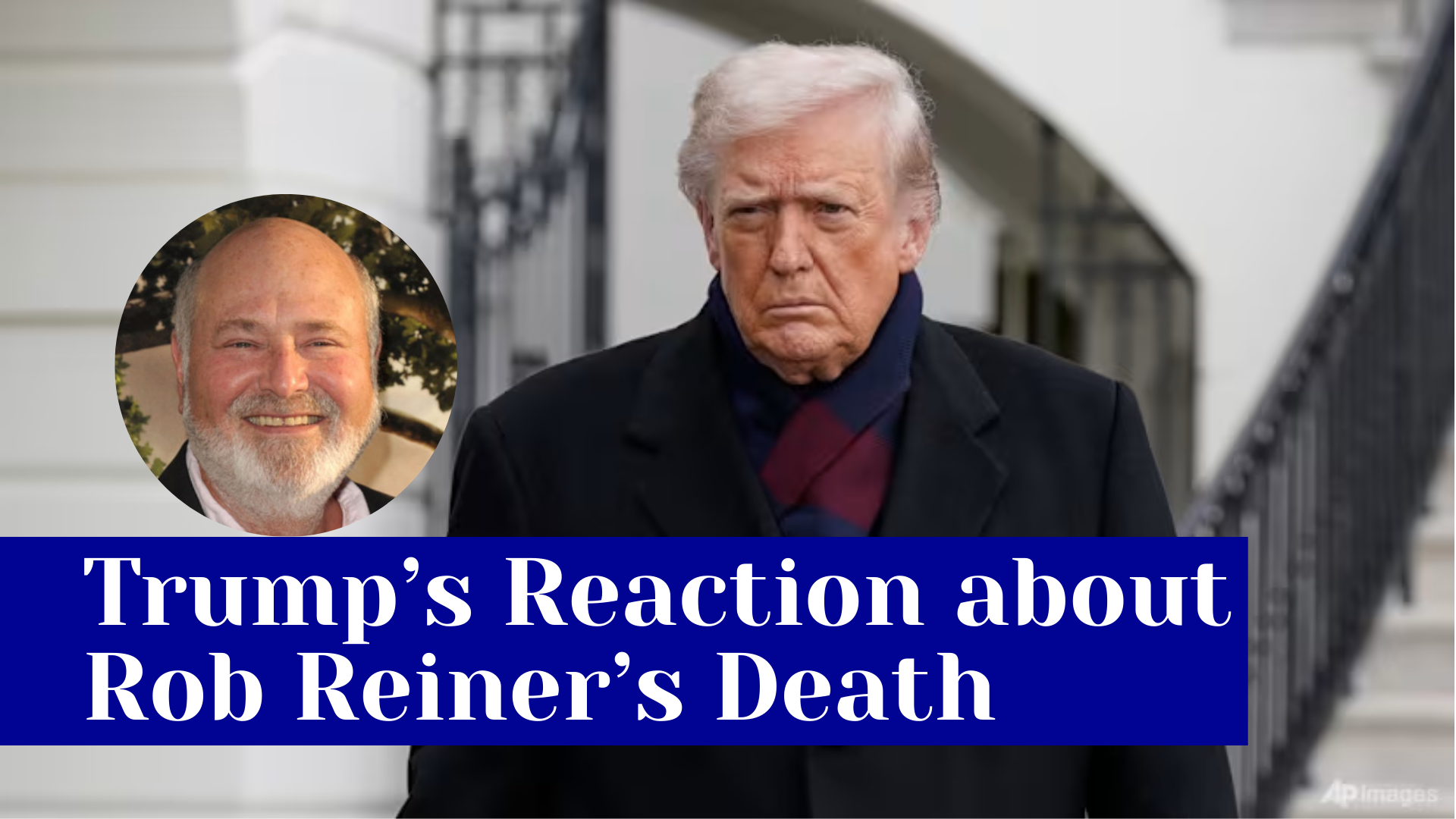
Rob Reiner and Donald Trump have never been on the same side of American politics. For years, the filmmaker and actor has been one of Trump’s most outspoken critics, while Trump has frequently responded with dismissive or derisive remarks. Their public exchanges, largely conducted through interviews and social media, form part of a broader clash between Hollywood liberals and populist conservative politics in the United States.
In December, that long-running tension resurfaced after alarming claims involving Rob Reiner and his wife circulated online. While those claims were not supported by verified law-enforcement statements or official confirmations, they triggered renewed attention on Reiner — and, shortly after, comments from Donald Trump that drew criticism for their tone and timing.
The Nature of Trump and Reiner’s Relationship
Rob Reiner has been politically active for decades, but his opposition to Donald Trump became particularly prominent during Trump’s 2016 campaign and presidency. Reiner repeatedly questioned Trump’s fitness for office, his rhetoric, and his approach to democratic institutions. In interviews, public talks, and social media posts, Reiner described Trump as dangerous to democratic norms and unqualified for leadership.
Trump, for his part, has never treated Reiner as a neutral critic. He has often referred to Reiner dismissively, framing him as a Hollywood figure driven by political obsession rather than reasoned disagreement. The president has repeatedly used the phrase “Trump Derangement Syndrome” to describe critics like Reiner, implying that their opposition is emotional or irrational rather than substantive.
This mutual hostility was well established long before the events that brought Reiner back into the headlines in December.
What Trump Said and When
After Reiner’s name began trending due to unverified and confusing online claims, Trump posted a message on social media addressing Reiner directly. Rather than expressing concern or restraint, Trump’s remarks focused on Reiner’s history of criticizing him.
In the post, Trump suggested — without citing any investigation, evidence, or official source — that Reiner’s political hostility had created anger around him. The wording implied that Reiner’s criticism of Trump may have contributed to whatever situation had unfolded.
Crucially, Trump did not reference any police findings, official statements, or verified facts, nor did he clarify that his remarks were opinion rather than inference. This lack of grounding is what turned the post from a political jab into a point of controversy.
Why the Comments Drew Backlash
The backlash did not come merely because Trump criticized a political opponent. It came because his comments appeared to imply causation without evidence at a moment when facts were unclear and emotions were high.
Law enforcement authorities, where statements were available, were focused on clarifying facts and urging caution. There was no credible public evidence that politics played any role in whatever situation had prompted Reiner’s name to trend. Against that backdrop, Trump’s remarks were widely seen as premature and insensitive.
Critics argued that when a person’s name becomes associated with alarming claims, especially involving family or personal safety, political leaders have a responsibility to avoid speculation.
Responses From Politicians
Reaction to Trump’s post was swift and crossed party lines.
Several Republican lawmakers publicly distanced themselves from the remarks. Representatives Thomas Massie and Marjorie Taylor Greene both described the comments as inappropriate in tone and poorly timed. While neither defended Reiner’s political views, they emphasized that personal tragedies or unverified incidents should not be politicized.
Democratic lawmakers were more direct, accusing Trump of exploiting uncertainty for political messaging. They argued that the comments showed a lack of empathy and risked amplifying misinformation at a sensitive moment.
What stood out was not disagreement over ideology, but discomfort with how the issue was addressed.
Reaction Beyond Politics
The criticism did not stop with elected officials. Public figures from media and entertainment also spoke out.
Commentators and television hosts described Trump’s remarks as unnecessary and harsh. Some emphasized that regardless of political differences, moments involving potential harm or family distress should be approached with restraint. Others pointed out that public figures’ statements can intensify confusion when facts are still emerging.
These reactions underscored how Trump’s comments resonated beyond the usual political echo chambers and entered broader cultural discussion.
Reiner’s Role as a Political Figure
Rob Reiner has never been a quiet celebrity. Over the years, he has actively used his platform to support causes, campaign for candidates, and criticize policies he opposes. That visibility has made him a frequent target of political counterattacks.
Supporters of Trump argued that Reiner’s own aggressive rhetoric invited equally strong responses. Critics countered that political disagreement does not justify implying responsibility for harm without evidence.
This tension reflects a larger issue in modern political culture: the collapse of boundaries between debate, accusation, and personal consequence.
The Problem of Unverified Narratives
One reason the controversy escalated so quickly is the speed at which unverified claims spread online. When names trend without context, speculation fills the gap. In such moments, statements from high-profile figures carry extra weight.
Media analysts noted that Trump’s post did not clarify uncertainty or urge caution. Instead, it framed the situation through a political lens, reinforcing assumptions rather than facts.
This dynamic — where speculation meets influence — is increasingly common in the digital age.
A Broader Conversation About Leadership Language
The episode reignited debate about how political leaders should speak during moments of uncertainty. Critics argued that leadership requires restraint, particularly when facts are incomplete. Supporters of Trump defended his blunt style as honest and unapologetic.
What is clear is that the comments shifted focus away from verification and toward political blame, drawing attention not to what was known, but to what was implied.
Where Things Stand Now
As of now, there is no verified public evidence linking Rob Reiner’s political views to any criminal act or personal harm. Any investigation, where applicable, remains a matter for law enforcement — not political commentary.
Trump’s remarks remain a subject of debate, not because of policy differences, but because of how rhetoric intersects with moments of personal vulnerability.
Final Reflection
The Trump–Reiner clash is not new. What made this episode different was context. In moments when facts are uncertain, words carry consequences. The reaction to Trump’s comments shows that many Americans — across political lines — still expect a basic level of restraint when real people are involved.
Political conflict may be inevitable. But how it is expressed continues to define leadership, credibility, and public trust.