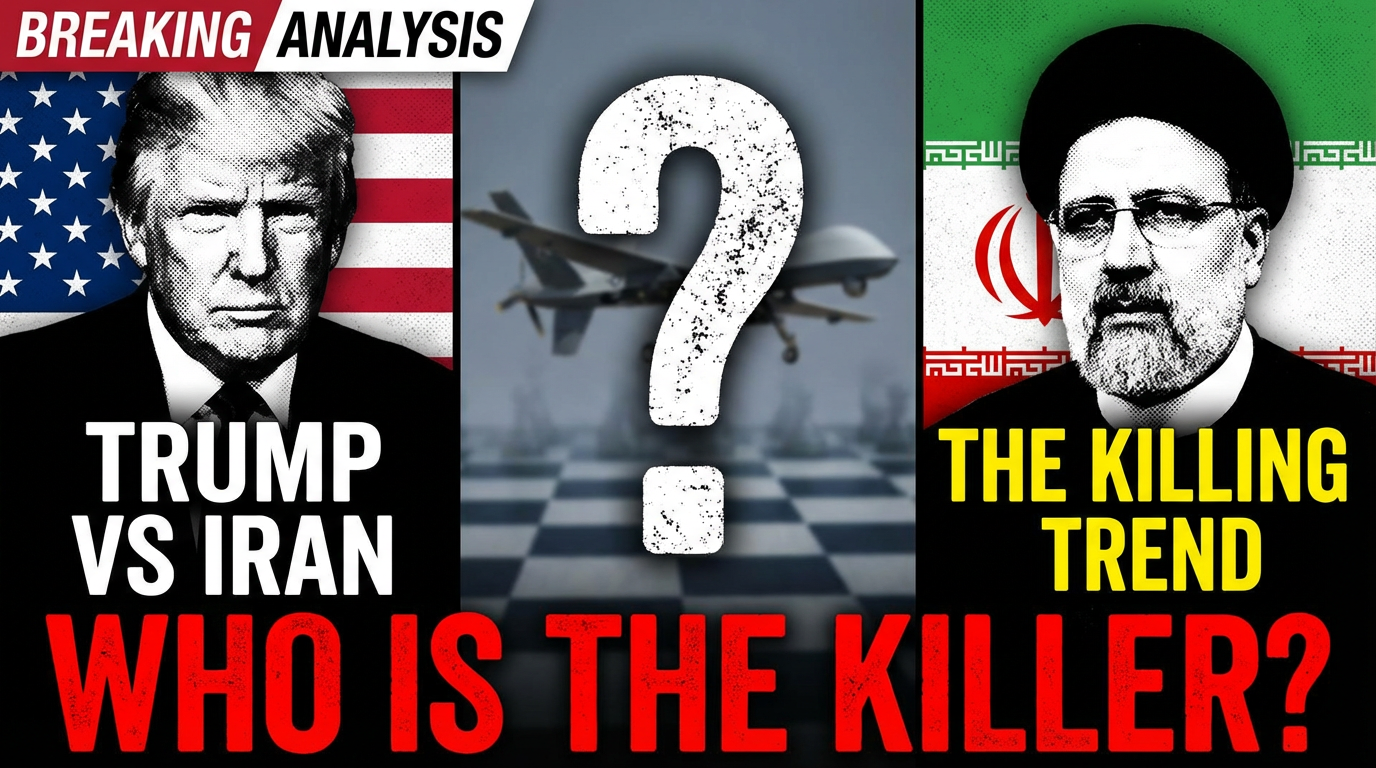
The question “Who is the killer?” has become a recurring and unsettling theme in discussions surrounding the escalating confrontation between Donald Trump and Iran. It is not a question limited to a single event or individual, but rather a broader inquiry into responsibility, causation, and consequence in a geopolitical conflict defined by assassinations, threats, retaliation, and the normalization of extreme rhetoric. Over the past several years, tensions between the United States and Iran have moved beyond traditional diplomatic hostility into a realm where targeted killings, alleged assassination plots, and threats of national destruction are openly discussed by senior leaders. This shift has alarmed policymakers, analysts, and international observers, who warn that the language and actions involved risk pushing the world toward irreversible escalation.
The roots of U.S.–Iran hostility stretch back decades, particularly to the 1979 Iranian Revolution, after which relations collapsed and mutual distrust became institutionalized. However, while previous administrations attempted to balance pressure with diplomacy, Donald Trump adopted a markedly confrontational approach during his presidency. One of his most consequential decisions was withdrawing the United States from the Iran nuclear agreement and reimposing sweeping economic sanctions. According to reporting by The New York Times and Reuters, this “maximum pressure” strategy severely weakened Iran’s economy, slashed oil revenues, and increased internal unrest, while failing to bring Tehran back to negotiations on U.S. terms. Iranian leaders interpreted the policy not merely as economic pressure but as a form of economic warfare, deepening resentment and reinforcing a siege mentality within the Iranian political establishment.
The conflict entered a far more dangerous phase in January 2020 with the U.S. drone strike that killed Iranian General Qasem Soleimani near Baghdad airport. Soleimani was one of the most powerful figures in Iran’s military and political structure, overseeing regional operations and acting as a symbol of Iranian influence across the Middle East. BBC News and the Associated Press described the killing as one of the most significant targeted assassinations of a state official in modern history. Iran immediately labeled the strike an act of terrorism and a declaration of war, while Trump and his administration defended it as a necessary defensive action to prevent future attacks on American personnel. This single event reshaped the entire narrative of the U.S.–Iran relationship, transforming long-standing hostility into an explicit cycle of killing and promised revenge.
In the aftermath of Soleimani’s death, Iranian leaders publicly vowed retaliation. According to Reuters, senior Iranian officials stated repeatedly that those responsible would face consequences, though they emphasized that revenge would come “at the right time.” Iranian state media and hardline commentators amplified this message, often using symbolic language suggesting that justice had not yet been served. While Iran officially denied planning specific assassination attempts, Western intelligence agencies took the threats seriously. CNN and Reuters reported that U.S. security agencies assessed credible risks to current and former American officials, including Donald Trump, and increased protective measures accordingly. These reports fueled further tension, as each side accused the other of preparing or provoking violence.
It was within this charged atmosphere that Donald Trump made one of his most controversial and alarming statements. According to reports by LiveMint and Daily News Egypt, Trump publicly declared that if Iran were ever to succeed in assassinating him, he had already instructed that Iran should be obliterated in retaliation. He reportedly stated that the response would be total and devastating, leaving no ambiguity about the scale of destruction he envisioned. Trump framed the statement as a deterrent, arguing that only the threat of overwhelming force could prevent political assassination and protect U.S. leaders. He criticized past administrations for what he described as weakness and insisted that clarity and severity were necessary to keep adversaries in check.
This statement triggered widespread international concern. Legal experts and diplomats, quoted by The Guardian, warned that threatening to destroy an entire country in response to an assassination attempt raised serious moral and legal issues under international law. Critics argued that collective punishment and threats of mass destruction violate principles of proportionality and civilian protection, regardless of provocation. Supporters of Trump, however, defended the remark as a blunt but effective warning designed to deter hostile actors, reflecting Trump’s broader political style of emphasizing strength and unpredictability.
Iran’s response was swift and furious. Iranian officials accused Trump of openly threatening genocide and called on the international community to condemn what they described as criminal rhetoric. According to coverage by state-aligned Russian and Middle Eastern media such as TASS, Iranian leaders argued that Trump’s words proved the United States posed an existential threat to Iran. At the same time, Iran warned that any attack on its own leadership, including its supreme leader, would be treated as a declaration of war. This exchange of threats entrenched a narrative in which both sides portrayed themselves as victims defending against existential danger, while simultaneously escalating the stakes.
Beyond the external confrontation, the question of responsibility becomes even more complex when considering Iran’s internal situation. Over recent years, Iran has experienced widespread protests driven by economic hardship, political repression, and social restrictions. According to the Associated Press and reports from international human rights organizations, these protests have been met with harsh crackdowns, resulting in thousands of deaths and arrests. Critics argue that Iran’s leadership cannot solely frame itself as a victim of foreign aggression while engaging in lethal repression at home. In this context, the question “Who is the killer?” applies not only to international actions but also to domestic policies that result in widespread loss of life.
Analysts cited by The Washington Post have emphasized that rhetoric itself plays a central role in escalating conflicts. When leaders openly discuss assassination and annihilation, they argue, such language normalizes violence and lowers the threshold for action. Trump’s statements about obliterating Iran, combined with Iranian rhetoric glorifying martyrdom and revenge, create a feedback loop in which each side’s words justify the other’s fears. This dynamic increases the risk of miscalculation, proxy attacks, or actions taken by non-state actors who believe they are acting in alignment with national goals.
In this broader context, the question “Who is the killer?” does not yield a simple answer. Responsibility is distributed across a series of decisions and reactions: the order to kill Soleimani, the vows of revenge that followed, the alleged assassination threats, and the promise of total destruction in response to a potential killing. Reuters-cited legal and geopolitical experts note that when escalation replaces restraint, accountability becomes collective rather than individual. The danger lies not only in who fires a missile or pulls a trigger, but in the political systems and narratives that make such outcomes appear justified or inevitable.
Ultimately, the Trump–Iran confrontation illustrates a troubling trend in modern geopolitics, where killing, whether targeted or mass, is increasingly treated as a legitimate tool of policy rather than a last resort. As long as leaders continue to frame conflicts in absolutist terms of survival and annihilation, the cycle of threat and retaliation will persist. Until diplomacy, accountability, and restraint replace public threats of obliteration and revenge, the question “Who is the killer?” will remain unanswered, haunting international politics and placing ordinary civilians at risk for decisions made far above their lives.