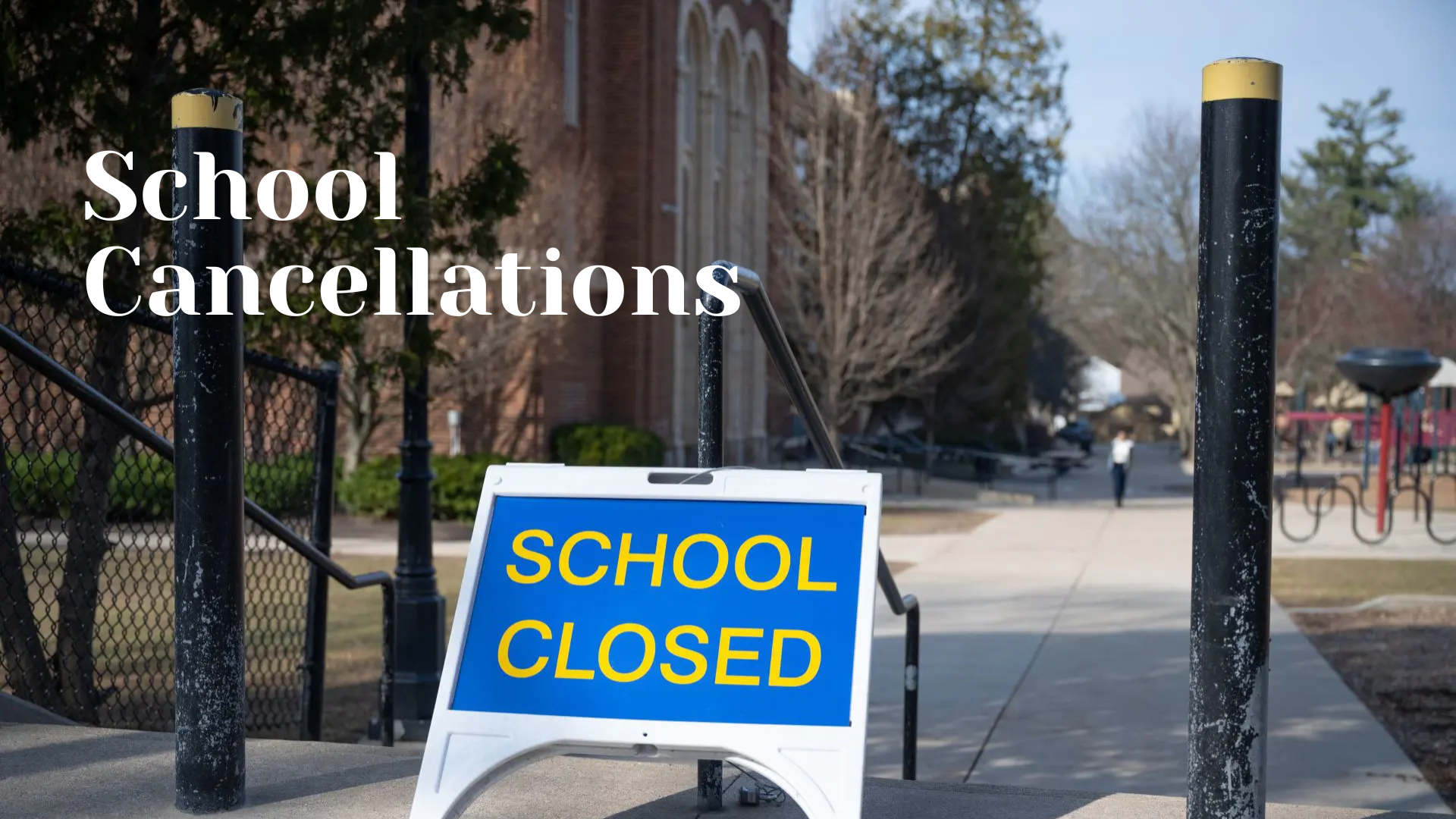
Across the United States this week, parents, students, teachers and administrators have again faced the familiar but often disruptive challenge of school cancellations and delays. From the Upper Midwest to New England, wintry conditions, slick roads and dangerous temperatures have led to widespread decisions to adjust academic schedules, close classrooms or delay the start of the school day. These cancellations highlight a pattern that many communities experience each winter, as safety and transportation issues force educators to balance continuity of learning with the well‑being of students and staff.
At the center of the most recent wave of cancellations is a persistent winter weather system bringing snow, freezing rain and gusty winds to large swaths of the northern and northeastern United States. In states such as Wisconsin and Michigan, blowing snow and drifting on rural roads resulted in widespread school closures and late starts on Wednesday. Districts in these regions cited hazardous travel conditions for buses and passenger vehicles alike, creating environments officials deemed unsafe for travel early in the morning. Northern parts of those states, where rural roads are common and snow‑removal equipment is stretched across broad territories, saw entire districts cancel classes or hold two‑hour delays to minimize risk for students and staff.
Similar decisions occurred in neighboring regions, including Minnesota. Several Minnesota school districts delayed or canceled classes earlier in the week after overnight freezing rain left roadways slick and treacherous. Communities such as Stillwater, St. Cloud and White Bear Lake opted for two‑hour late starts, while others adjusted schedules to reflect the realities of hazardous conditions for buses and commuters. In western Wisconsin, too, local officials made similar calls aimed at reducing the risk of early‑morning travel, often factoring in overnight temperatures that caused untreated roads to freeze solid.
Travel concerns go beyond snow and ice. In parts of New England, dozens of schools announced delays or modest openings ahead of a predicted wintry mix that forecasters said could impact roads later in the morning. School boards and superintendents in areas like New Hampshire issued two‑hour delays or limited operations for certain programs such as preschool, while some facilities stayed closed for the day. Decisions like these reflect an attempt to give families added time to prepare and to allow road crews an opportunity to treat surfaces before buses and cars are back on the move.
Delays can vary widely from place to place, even within the same region. Some districts choose a two‑hour late start so that students arrive after overnight refreeze and early‑morning frost, while others opt for full closure when conditions are most dangerous or persistent. In some rural areas where side roads and driveways might not be treated as quickly as urban streets, superintendents have explained that the priority is avoiding risk, even if it means multiple days of no school in a row.
These decisions often raise a familiar dilemma for families — balancing safety concerns with the impact extended breaks have on academics, childcare arrangements and work schedules. For working parents in particular, a last‑minute cancellation or early closing can trigger a scramble to find daytime supervision for young children. Some families will adjust by turning to relatives or sitters, while others may face tough choices about time off from work.
School administrators often try to minimize disruption by finalizing and sharing cancellation decisions as early as possible. Many districts have systems that notify families by automated calls, texts or emails before dawn, so parents have time to plan for childcare or alternative school arrangements. These communications are critical given the number of families that depend on predictable schedules.
Beyond immediate travel safety, extreme temperatures can also influence closure decisions. In some parts of the Midwest, bitter cold with wind chills can pose health risks to children waiting at bus stops or walking to school. Factors such as frostbite risk, reduced bus fleet reliability in extreme temperatures, and challenges with keeping buildings adequately heated all factor into decisions about whether to call off classes on any given day.
There have been notable recent examples illustrating how sensitive this balance can be. In January of this school year, several districts faced unusually cold wind chills that prompted closures beyond isolated weather events. One district in the central United States canceled school for the fifth time that month due to bitter cold, with forecasts showing wind chills well below zero. Administrators cited concerns not just about transportation but also about student health on frigid days, especially for those who walk to school or wait outdoors for buses.
Schools aren’t the only institutions adjusting to winter’s grip. Transportation network disruptions in metropolitan areas, including canceled flights and gridlocked roads, often accompany these closures and reinforce the reasons districts cite for safeguarding students. When major cities brace for lake‑effect snow or prolonged winter storms, the ripple effects on infrastructure feed back into decisions about whether it is safe to keep schools open.
Some parts of the country see more cancellations than others because of infrastructure and geography. The Upper Midwest and Northeast have a long history of snow days, while southern states generally experience fewer winter closures due to milder climates and more responsive road treatment plans. Still, even parts of the South and central states sometimes adjust schedules dramatically when rare snowfall or ice events occur. Historical storms have left regions including the South with school cancellations when roads became unintentionally treacherous or when maintaining clear transportation routes proved difficult.
Historical patterns show that weather‑related school closures are cyclical and tied closely to broader climatological patterns. Large winter storms, cold waves, and arctic fronts periodically push temperatures and precipitation into territory that strains local governments’ ability to maintain safe travel conditions. In years with record snow or persistent cold, cancellations cluster more tightly on the calendar, affecting not just individual days but sometimes spreading into several consecutive closures.
Even with modern forecasting and communication technology, decisions about cancellations require careful judgment calls. School authorities must weigh forecasts, road‑treatment progress, school bus schedules, building heating capabilities and feedback from local public works departments. Often the final call comes within a narrow window of time before school would normally begin, as conditions can change quickly overnight.
At the same time, the experience of families and communities during cancellations has changed over generations. Earlier eras often required families to tune into morning radio or television announcements to see if their district was listed among closures. Today, automated alerts and smartphone notifications streamline that process, though the emotional reactions — relief for students hoping for a break, or frustration from parents juggling work logistics — remain unchanged.
Some families even recall memories of snow days from childhood, where the thrill of a day off from school was punctuated by running outside or gathering around a television to catch closure updates alongside neighbors. While those experiences vary by region and weather patterns, the essence of the snow day persists even as the mechanics of informing families evolve.
Despite the clear safety imperatives behind many cancellations and delays, these adjustments can have academic and social implications. School districts often plan makeup days into the calendar to compensate for lost instructional time, sometimes extending the school year by a day or two. Remote learning or hybrid options are occasionally used to ensure continuity of education when closures stretch longer than expected.
For educators, cancellations also mean rescheduling lesson plans and assessments. Teachers must balance pacing guides and curriculum standards with the reality that multiple closures can compress available instructional days. In some cases, districts have systems to pivot to virtual learning if conditions allow, though not all districts have the same technological capacity to implement that seamlessly.
Looking ahead, communities will continue to adapt as weather patterns evolve and as school systems refine their response plans. Parents and educators alike understand that closures can be disruptive, but most agree that safety and well‑being take precedence when roads, temperatures and travel conditions pose significant risks to students. While a day off may be welcome to some students, the underlying reason for a cancellation or delay — whether it’s icy roads, bitter cold, or a forecast that threatens unsafe travel — is always rooted in protecting children and staff.
What remains clear is that school cancellations are not random or arbitrary. They are the result of careful consideration by officials who must balance competing priorities in unpredictable conditions. From the snowy expanses of the Midwest to the cold‑soaked towns of New England, communities across the United States are learning again this winter how to navigate schedules, safety and the rhythms that define the academic year.