On a cold December night in front of one of the loudest crowds Oklahoma has seen in years, the Sooners looked on track to spoil Alabama’s playoff hopes. But by the time the final whistle sounded, it was Alabama celebrating a remarkable comeback, rallying from a 17‑point deficit to win 34‑24 in the first round of the College Football Playoff.
The game swung through momentum shifts, big plays and late‑game resilience. Oklahoma dominated early with a defense that seemed to have Alabama off balance. The run‑and‑shoot offense of the Sooners moved efficiently. But as the night wore on, the Tide — under second‑year head coach Kalen DeBoer — found life in their offense, tightened up in key moments on defense and slowly took control.
Alabama’s rally didn’t feel inevitable at first. Oklahoma’s opening drive was nearly flawless, taking the ball deep and finishing with a touchdown that energized the crowd. When Oklahoma added a second score and forced three stalled possessions from Alabama’s offense, it looked as if they might control the narrative for the full 60 minutes.
But the game changed in the second quarter when Alabama’s defense forced an interception and returned it for a touchdown. That play didn’t just cut the lead — it shifted the emotional balance of the night. The sudden change deflated Oklahoma’s momentum and gave Alabama something it had lacked in the early going: confidence.
The Tide kept that confidence into halftime, trimming the deficit before the break. What had been a 17‑point Oklahoma lead became a tight ballgame, and suddenly the energy in Memorial Stadium began to feel less like a hometown celebration and more like a contest once again up for grabs.
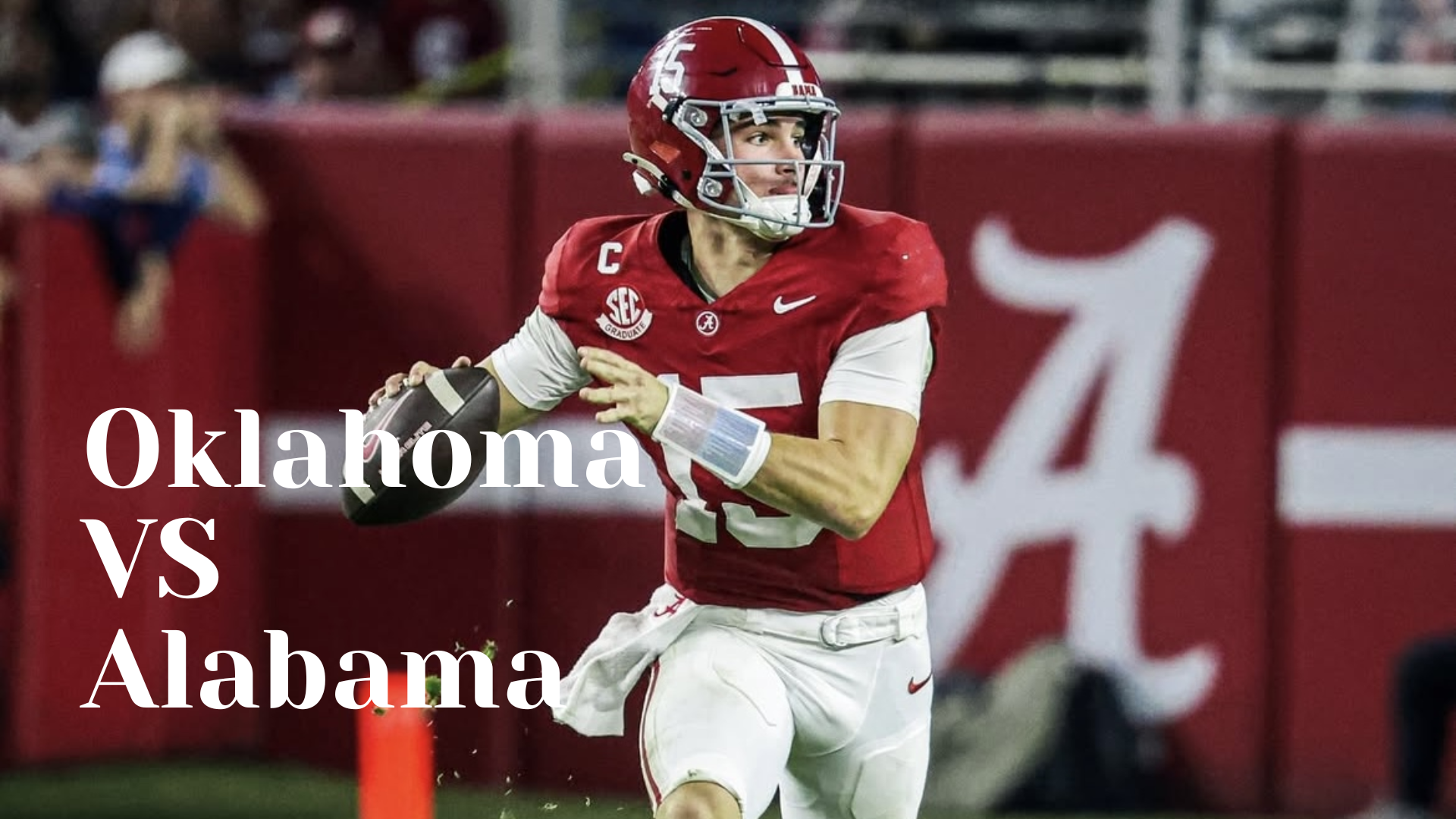
Coming out of halftime, Alabama’s offense found rhythm with more consistent play‑calling and better protection up front. Quarterback Ty Simpson, who had battled inconsistency earlier in the season, showed poise against a tough pass rush, finding receivers downfield and managing the clock effectively. Freshman Lotzeir Brooks, who had been used sparingly earlier in the year, became a focal point of the comeback with two key touchdown receptions and several critical first‑down conversions.
By the end of the third quarter, Alabama had taken the lead for the first time. A well‑executed drive that mixed runs and timely passes gave the Tide a one‑score advantage, and the crowd — once mostly in Oklahoma red — was noticeably quieter. The momentum had fully swung.
Oklahoma didn’t go quietly. Early in the fourth quarter, quarterback John Mateer connected with Deion Burks on a 37‑yard touchdown that cut Alabama’s lead to three points. Sooners fans roared as though the upset was still alive. But the Tide’s defense, which had struggled at times early, responded with pressure that forced Oklahoma into second‑and‑long situations. Oklahoma’s otherwise reliable kicker, Tate Sandell, was called upon for two attempts late in the game but missed both — one from 36 yards and another from 51 — misses that ultimately kept the Sooners from regaining the lead.
Sandell had been one of the nation’s most consistent kickers during the regular season, but the disconnect between his earlier performance and the crucial playoff misses became one of the defining storylines of the night. Turnovers at key moments also hindered Oklahoma’s ability to sustain late drives.
Despite the loss, Oklahoma’s performance was far from a collapse. Mateer finished with more than 300 passing yards, and Burks exceeded 100 receiving yards, making strong plays throughout. The defense that had been so effective early in the game continued to fight. But in football, total performance over four quarters — not flashes — determines outcomes, and Alabama’s ability to adjust mid‑game proved decisive.
For Alabama, the victory was a statement. The Crimson Tide will carry this win into the quarterfinal round of the College Football Playoff, where they are expected to face the top seed at the Rose Bowl. The role of momentum cannot be overstated: coming back from 17 points down against a ranked opponent on the road gives Alabama both confidence and narrative power heading into their next matchup.
Players and coaches on the Alabama sideline spoke after the game about belief and discipline. They acknowledged the rough start and credited their ability to stick to game plans, adjust at halftime, and execute under pressure with turning the tide. Those comments reflected a group that has dealt with adversity throughout the season but chose to respond rather than fold.
For Oklahoma, the loss brings an abrupt end to a season that had raised expectations for many fans. The Sooners entered the playoffs with a strong resume, including wins over quality opponents earlier in the year, and they opened this game looking every bit the team that had earned national attention. But postseason football can hinge on a handful of plays, and a couple of big swings — the pick‑six and the missed kicks — were enough to tilt the final score.
The mood among Oklahoma supporters after the game was a blend of disappointment and pride. Many fans expressed frustration about missed opportunities but also acknowledged how tough playoff football can be. On social media and among local radio callers, voices praised Mateer’s effort and Burks’ big night while lamenting the missed late chances that could have changed the final outcome.
The broader college football community also weighed in. Analysts noted that this matchup was a reminder of both the parity and unpredictability that the expanded playoff format has produced. Oklahoma’s early dominance and Alabama’s comeback illustrated how quickly games can change, and how teams must sustain performance for a full four quarters.
The Tide’s ability to come back in hostile territory will be a topic of discussion this week as they prepare for their next opponent. Many observers see Alabama’s resilience as a hallmark of championship‑caliber teams, while others credit the individual playmakers who stepped up at critical moments.
There was no shortage of storylines inside and around the stadium. The interception return for a touchdown, the false starts and penalties that dogged Oklahoma at key moments, and the way Alabama’s offensive line settled in as the game wore on all became parts of the narrative that fans and commentators will revisit over the next week.
For the players, the emotions ranged from jubilation on the Alabama sideline to quiet reflection among Oklahoma’s ranks. Coaches from both sides offered measured praise and criticism in postgame interviews, acknowledging that execution in high‑pressure situations often makes the difference in playoff football.
In the end, the scoreboard read Alabama 34, Oklahoma 24. It was not a score that told the whole story — not the early dominance nor the back‑and‑forth nature of the contest — but it was the number that advanced Alabama and sent Oklahoma home.
As the Crimson Tide prepare for their quarterfinal game, both teams will carry lessons from this matchup forward. For Alabama, the belief that no deficit is too large. For Oklahoma, the understanding that in playoff football, execution late and in critical moments is as important as strong starts.
For fans across the country, Friday night’s game was one more example of why college football captivates so many: the swings in momentum, the human drama of players responding to adversity, and the feeling that no outcome is certain until the clock hits zero.