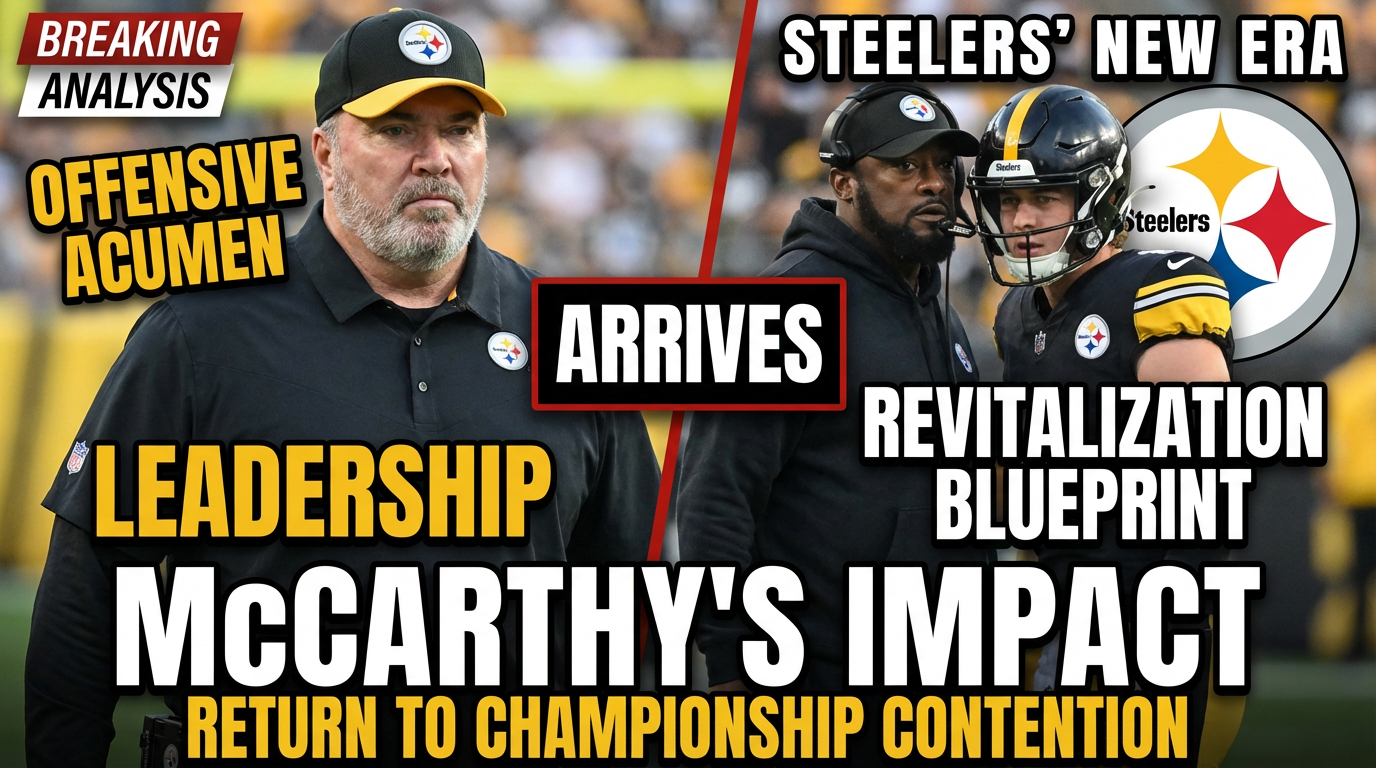
Mike McCarthy’s arrival as head coach of the Pittsburgh Steelers has been one of the most talked-about moves in recent NFL history. Known for his offensive ingenuity and Super Bowl-winning experience with the Green Bay Packers, McCarthy brings a wealth of knowledge and a proven track record to a Steelers franchise eager to regain its competitive edge. His approach to coaching combines disciplined preparation, innovative offensive strategies, and a strong focus on player development, making him an ideal fit for a team looking to balance tradition with modernization. As the Steelers navigate this new era, McCarthy’s impact is already becoming evident in terms of game strategy, team morale, and long-term planning.
McCarthy’s coaching philosophy has always emphasized a high-powered, adaptable offense. During his tenure with the Packers, he demonstrated a unique ability to adjust game plans based on opponent tendencies and in-game situations. For the Steelers, this means an offense that can evolve week by week, taking advantage of both the team’s veteran talent and emerging players. McCarthy places a premium on quarterback development, tight end utilization, and the integration of versatile running backs, which can create a dynamic and unpredictable offensive system for Pittsburgh. His arrival has sparked optimism among fans who hope to see a revitalized offensive identity in the coming seasons.
One of McCarthy’s strengths is his ability to manage high-pressure situations. Throughout his career, he has consistently demonstrated composure during critical moments, making decisive calls that often influence the outcome of playoff games. For the Steelers, this expertise is invaluable. Pittsburgh has historically relied on strong defense and a balanced attack, but McCarthy introduces a more aggressive offensive mindset that can complement the team’s defensive traditions. His approach encourages calculated risk-taking, particularly in red-zone situations, which can help the Steelers convert key opportunities into points.
In terms of leadership, McCarthy is widely regarded as a coach who builds strong relationships with players. He emphasizes accountability, communication, and a team-first mentality, which aligns well with the Steelers’ organizational culture. Veteran players appreciate his ability to combine discipline with support, while younger athletes benefit from his mentorship and focus on skill development. This balance fosters a culture of professionalism and competitiveness, which is essential for a franchise aiming to compete at the highest level in a challenging AFC landscape.
McCarthy’s impact on the Steelers’ offensive line and quarterback play is particularly noteworthy. Quarterback performance often determines the overall effectiveness of an NFL offense, and McCarthy has a proven track record of developing quarterbacks to reach their potential. By implementing a structured yet flexible offensive system, he can optimize the strengths of Pittsburgh’s signal-caller while mitigating weaknesses. This includes emphasizing timing routes, play-action passes, and a mix of inside and outside running plays that keep defenses off balance. Over time, this strategic approach can increase scoring efficiency and improve the team’s overall win-loss record.
Defensively, McCarthy understands the importance of balance and complementary football. While his expertise is primarily offensive, he collaborates closely with defensive coordinators to ensure that the offense and defense operate in harmony. This holistic approach allows the Steelers to control game tempo, manage clock situations effectively, and capitalize on turnovers. In games against elite AFC opponents, this balance can be the difference between a narrow win and a decisive loss, highlighting McCarthy’s strategic foresight and adaptability.
Another key factor in McCarthy’s success with the Steelers is his ability to integrate analytics and modern technology into game preparation. He is known for using data-driven insights to optimize play calling, personnel deployment, and situational strategy. This analytical mindset can enhance decision-making on critical downs, improve efficiency in third-down situations, and help identify tendencies in opposing teams. For a franchise like the Steelers, blending traditional football knowledge with modern analytics offers a pathway to sustained competitiveness.
Team morale and culture are central to McCarthy’s leadership style. He encourages open communication between coaches and players, ensuring that everyone understands their role within the system. This clarity helps maintain focus during high-pressure stretches of the season, particularly in games against playoff-caliber opponents. By emphasizing preparation, discipline, and adaptability, McCarthy fosters a mindset that allows the Steelers to remain competitive even in challenging circumstances. This approach also contributes to a sense of unity, which is essential for sustained success in a league where roster changes and injuries are constant challenges.
The Steelers’ fan base has responded positively to McCarthy’s hiring, recognizing his history of playoff success and offensive innovation. Supporters see him as a coach capable of revitalizing the team’s identity while maintaining the competitive spirit that has defined Pittsburgh football for decades. High expectations accompany this optimism, as fans hope to see improved performance in key areas such as scoring efficiency, third-down conversions, and overall game management. McCarthy’s reputation as a disciplined, adaptable, and innovative coach gives credibility to these expectations.
Looking toward the future, Mike McCarthy’s tenure with the Steelers has the potential to redefine the franchise’s trajectory. By implementing his offensive philosophy, integrating analytics, and fostering a positive team culture, he sets the stage for long-term success. Key metrics to watch include quarterback development, offensive efficiency, win-loss record in divisional matchups, and playoff performance. Success in these areas could position Pittsburgh as a perennial contender, combining its historic defensive strength with a modern, adaptable offensive identity.
Mike McCarthy’s arrival at the Pittsburgh Steelers represents a major step forward for the franchise. His offensive acumen, leadership skills, and strategic flexibility provide a blueprint for revitalizing a team eager to return to championship contention. By blending tradition with innovation, McCarthy has the tools to influence the Steelers’ performance on multiple levels—from quarterback development and offensive production to team culture and playoff competitiveness. Fans and analysts alike will closely monitor his impact, anticipating a renewed Steelers identity built on preparation, adaptability, and sustained excellence.