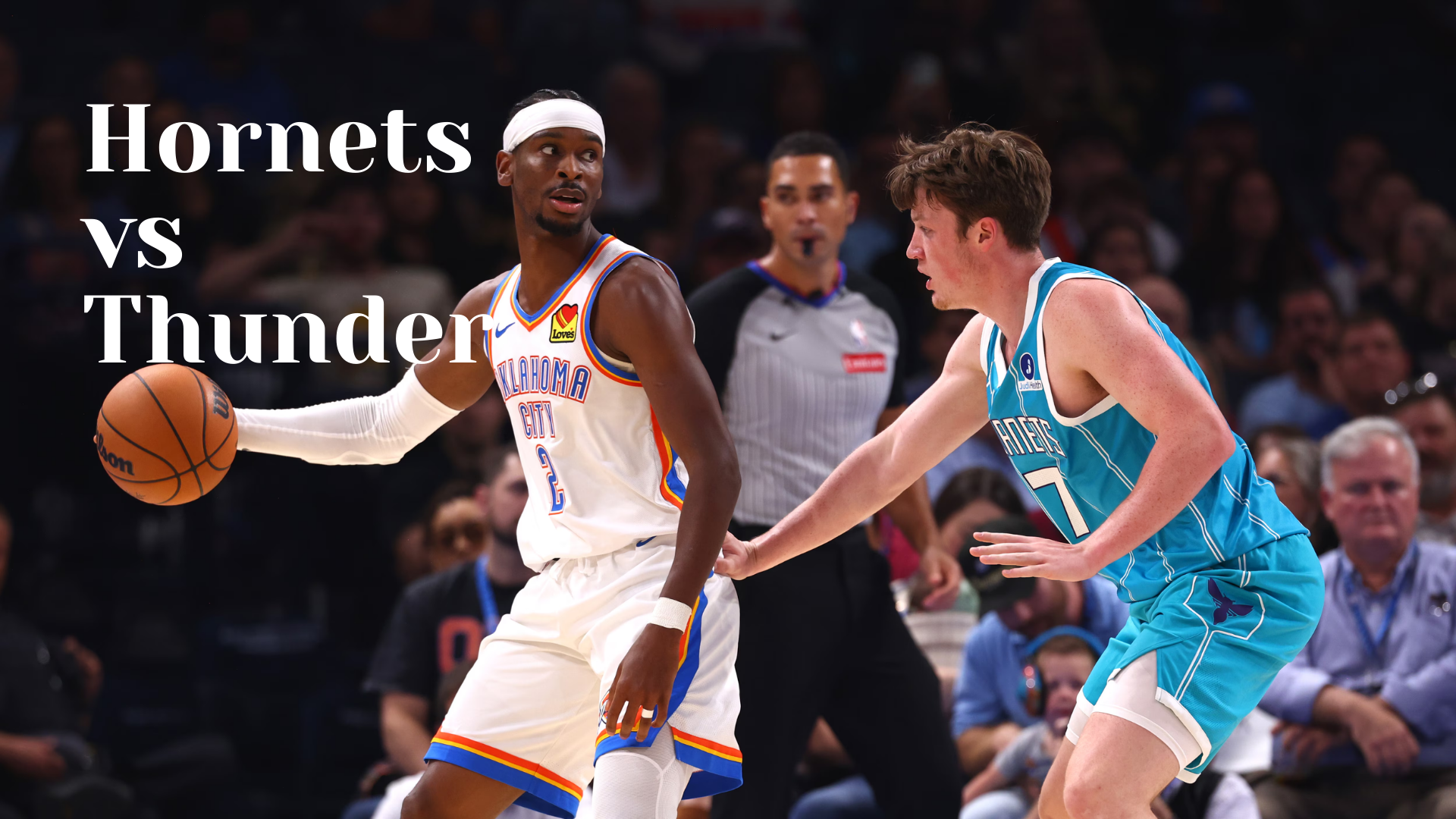
Oklahoma City — In a game defined by fast breaks, perimeter shooting, and strong defensive rotations, the Oklahoma City Thunder overcame the Charlotte Hornets 118‑111 at Paycom Center. The matchup showcased emerging talent on both teams, highlighted veteran leadership, and delivered a competitive contest from the first tip-off to the final buzzer. Both teams entered the game with playoff positioning and momentum in mind, making this a key encounter in the early-season standings.
The Thunder, led by Shai Gilgeous‑Alexander and Jalen Williams, aimed to solidify their spot among Western Conference contenders. The Hornets, in a transitional phase, sought to test their young core and maintain their trajectory as a developing team with high-end potential. What unfolded was a game of runs, adjustments, and standout individual performances.
First Quarter: Hornets Take Early Advantage
Charlotte came out strong, using quick ball movement and perimeter shooting to build an early lead. LaMelo Ball orchestrated several scoring sequences with his signature court vision, connecting with teammates cutting to the basket and hitting open shooters on the perimeter. Ball’s pick-and-roll combinations with P.J. Washington helped create mismatches in the Thunder’s defense, resulting in early points in the paint.
Terry Rozier added back-to-back mid-range jumpers to extend the Hornets’ lead to 10 points midway through the quarter. Oklahoma City responded with aggressive drives by Gilgeous‑Alexander and high-energy finishing from Chet Holmgren inside, slowly cutting the deficit. By the end of the first quarter, Charlotte led 33‑28, energizing the crowd with their efficient, fast-paced offense.
Second Quarter: Thunder Adjust and Respond
The second quarter saw Oklahoma City’s adjustments take hold. Coach Mark Daigneault emphasized defensive rotations to limit Ball’s penetration and pressured Hornets’ shooters into more contested shots. The strategy worked as turnovers and fast-break points began to shift momentum.
Gilgeous‑Alexander scored 12 points in the quarter, displaying his ability to attack gaps, find open teammates, and convert in transition. Jalen Williams added mid-range scoring and sharp cuts to the basket, helping the Thunder close the gap. Charlotte struggled to maintain early energy, and their shooting efficiency dipped slightly, allowing Oklahoma City to take a narrow 60‑58 lead into halftime.
Third Quarter: Back-and-Forth Fireworks
The third quarter emerged as a seesaw battle. LaMelo Ball regained his rhythm, hitting step-back jumpers and initiating pick-and-roll plays to generate open looks. Washington and Rozier contributed with driving baskets and smart spacing, keeping the Hornets within striking distance.
The Thunder relied on a balanced scoring attack. Holmgren provided rim protection and second-chance points on offensive boards, while Gilgeous‑Alexander’s drives forced the Hornets’ defense to collapse, opening shots for Williams and Luguentz Dort. Several lead changes occurred, with neither team able to extend a meaningful advantage. By the end of the third quarter, Oklahoma City led 89‑87, setting up an intense fourth quarter.
Fourth Quarter: Execution Decides Outcome
The final quarter tested composure, execution, and strategic decision-making. Both teams traded baskets early, but Oklahoma City gradually pulled ahead through a combination of shooting and disciplined defense. Gilgeous‑Alexander scored on multiple drives, and Williams hit key mid-range jumpers to keep the Hornets at bay.
Charlotte fought back through LaMelo Ball’s passing and Washington’s inside scoring. However, a critical stretch midway through the quarter saw Charlotte miss open perimeter shots while committing turnovers on contested possessions. Oklahoma City capitalized with fast-break points and transition layups that expanded their lead to double digits.
In the final minutes, the Hornets pushed to reduce the deficit but could not fully close the gap. The Thunder maintained control at the free-throw line, executed defensive rotations, and prevented Charlotte from generating clean looks in the paint. When the final buzzer sounded, the scoreboard read 118‑111, a testament to Oklahoma City’s composure and balanced scoring.
Player Performances
Oklahoma City Thunder
- Shai Gilgeous‑Alexander led the Thunder with 31 points, demonstrating playmaking, driving ability, and clutch scoring in the fourth quarter.
- Jalen Williams added 24 points and 9 rebounds, combining off-ball movement and mid-range shooting to key the team’s balanced offense.
- Chet Holmgren contributed 14 points, 11 rebounds, and 3 blocks, providing interior defense and finishing on offensive boards at pivotal moments.
- Luguentz Dort added 12 points and steady perimeter defense, disrupting Charlotte’s shooters and forcing turnovers in critical stretches.
Charlotte Hornets
- LaMelo Ball scored 28 points with 9 assists, orchestrating much of the offense and creating opportunities for teammates throughout the game.
- P.J. Washington added 22 points and 7 rebounds, providing consistency inside and a threat on drives.
- Terry Rozier contributed 19 points, including several mid-range jumpers that kept Charlotte competitive in the third quarter.
- Miles Bridges had 15 points and 6 rebounds, energizing the floor with athletic finishes and defensive effort.
Coaching and Strategy
Thunder coach Mark Daigneault highlighted the team’s defensive adjustments and late-game execution as the deciding factors. Emphasizing rotations to contain LaMelo Ball and collapse help on drives opened up offensive opportunities, allowing his team to capitalize efficiently. The use of Holmgren in rim protection and Wiggins-style spacing maintained interior integrity while allowing shooters to find open looks.
Hornets coach James Borrego noted that while the team competed well and executed offensive schemes effectively, missed opportunities in transition and late-game defensive rotations were costly. He praised the young core’s effort but emphasized consistency in closing out tight games as a priority moving forward.
Key Takeaways
The game underlined the Thunder’s capacity to execute under pressure and showcased their depth and emerging talent. Gilgeous‑Alexander continues to demonstrate leadership, while Williams and Holmgren provide the necessary support to balance scoring and defense. Charlotte, despite the loss, displayed growth in its young players and flashes of cohesion that signal potential for future contests.
The Thunder’s victory highlights their playoff readiness and ability to capitalize on defensive rotations. For the Hornets, the game serves as a learning opportunity about finishing close contests and maximizing offensive efficiency in the final minutes.
Broader Implications
For Oklahoma City, the win strengthens positioning in the competitive Western Conference and demonstrates the value of a balanced lineup capable of responding to momentum swings. Charlotte, while suffering a loss, continues to gain experience with its young roster, illustrating the gradual development of a team in transition.
Analysts noted that the Thunder’s ability to execute transition plays and maintain scoring diversity under pressure mirrors traits often associated with successful playoff teams. The Hornets, meanwhile, must refine late-game execution and improve consistency in defensive schemes to convert promising performances into wins.
Fan and Media Reaction
Fans of both teams responded enthusiastically to the competitive nature of the game. Oklahoma City supporters highlighted the poise of Gilgeous‑Alexander and the balanced offensive effort, while Hornets fans praised LaMelo Ball’s playmaking and the energy from the young core. Analysts focused on key stretches in the fourth quarter, evaluating defensive adjustments, scoring efficiency, and clutch performance as critical differentiators.
Looking Ahead
Both teams will shift focus to upcoming schedule matchups. Oklahoma City seeks to maintain momentum and strengthen team cohesion, while Charlotte aims to refine late-game execution and defensive rotations. The contest provided valuable insights into how both teams respond to pressure, set up plays, and execute in critical moments.
As the season progresses, games like Thunder vs. Hornets offer both developmental benchmarks for younger squads and confidence-building opportunities for established players. Fans and analysts alike will watch closely to see how the lessons from this matchup influence team performance in the weeks and months ahead.