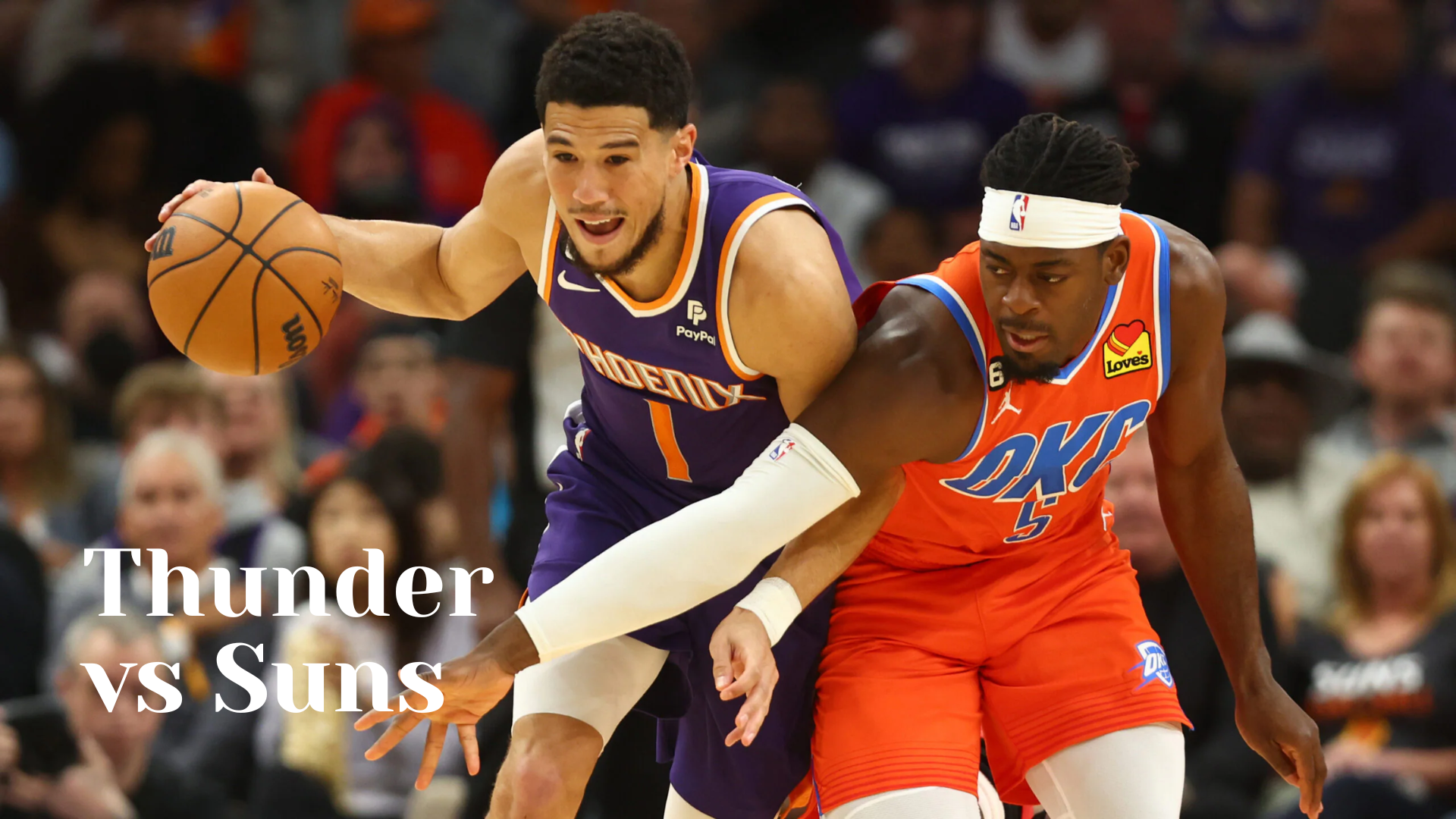
Phoenix — In a Western Conference matchup that lived up to its billing, the Oklahoma City Thunder edged the Phoenix Suns 112‑106 on Tuesday night at Footprint Center. The contest featured momentum swings, standout performances from young stars, and a late surge that ultimately put the Thunder in front for good.
Both teams came into the game with a mix of aspirations and challenges. OKC was trying to solidify its place among the league’s emerging contenders, while Phoenix hoped to string together wins that would elevate its seeding in a crowded Western Conference. What resulted was a physical, hard‑fought game that tested offensive balance, defensive discipline, and late‑game execution.
First Quarter: Suns Hit Early
The Suns came out with a sense of urgency, attacking the paint and knocking down early jump shots that gave them an early edge. Devin Booker, calm and poised, orchestrated several scoring opportunities with mid‑range pull‑ups and deft passes that found shooters on the perimeter. His rhythm opened driving lanes and put pressure on the Thunder’s defense to make tough assignments.
Phoenix’s blend of interior touches and kick‑out passes kept Oklahoma City guessing. The Thunder’s younger guards struggled to close out on shooters early, and the Suns’ spacing allowed them to move the ball efficiently. A couple of timely corner threes by Bradley Beal extended the early run, and Phoenix found itself up by as many as eight points midway through the first quarter.
The Thunder, to their credit, responded with poise. Jalen Williams and Shai Gilgeous‑Alexander combined for several clean looks that cut into the Suns’ lead by the end of the period. Oklahoma City’s varied attack mixed drives to the basket, kick‑outs for open looks, and smart ball movement that generated good shot quality — even if the finishing wasn’t always there early.
Second Quarter: Thunder Rally
The second quarter marked a shift in momentum. Oklahoma City tightened its defense, forcing longer possessions and errant shots from Phoenix. Gilgeous‑Alexander, finding seams in the Suns’ coverage, created scoring opportunities not just for himself but for teammates buried in the rotation.
A 10‑2 run midway through the quarter gave the Thunder their first lead of the night, and the crowd buzzed as the Suns called timeout to stem the tide. Defensive rotations improved for OKC, and active hands produced several key deflections that turned into transition buckets. Defensive rebounding also became a factor, with the Thunder limiting second‑chance points at a crucial juncture.
Booker continued to put up points for Phoenix, but isolated production wasn’t enough to sustain the early offensive success. The Suns became a bit stagnant at times, missing open looks and settling for contested jumpers that didn’t fall with enough consistency.
By halftime, the Thunder had a four‑point lead, setting the stage for an intriguing second half. Oklahoma City’s bench provided momentum with energy plays on both ends, while Phoenix’s scoring relied heavily on ball screens and isolation looks for its top options.
Third Quarter: Back‑and‑Forth
The third quarter saw both teams re‑establish their identities. The Suns came out firing from deep, knocking down a couple of early threes that kept them within striking distance. Booker and Kevin Durant — making his presence felt with efficient scoring — pushed Phoenix into a balanced attack that mixed quick baskets with patient ball movement.
Oklahoma City countered with its dynamic backcourt. Gilgeous‑Alexander orchestrated scoring bursts and made smart decisions under pressure, while Josh Giddey kept the ball moving and found teammates for open shots. The Thunder’s fluid offense helped them weather Phoenix’s runs and stay within a possession or two throughout most of the period.
On defense, the Suns offered aggressive rotations and contested shots at the rim, but that opened up opportunities for cutters and shooters that Oklahoma City exploited. By the end of the third, the score was tight and the energy in the arena pulsing — a testament to the competitive balance between two teams playing with purpose.
Fourth Quarter: Close and Competitive
The fourth quarter was a clutch‑filled affair. With both teams trading leads, execution down the stretch became the deciding factor. Oklahoma City built a slim lead early, but the Suns matched every basket with a response that kept fans standing.
A turning point came with about six minutes remaining when the Thunder executed a play that resulted in a huge three‑point basket and drew a foul, igniting a key run. The scoring play pushed the lead to five and forced the Suns to adjust defensively. Phoenix’s attempt to answer saw some miscommunication on rotations, and Oklahoma City capitalized with a few easy buckets in transition.
With under three minutes to play, the Thunder led 104‑100, but the Suns weren’t done. Booker hit a tough step‑back jumper, and Durant added a baseline finish to keep the game within two possessions. However, Oklahoma City’s balanced attack continued to deliver. A contested pull‑up by Williams and a timely mid‑range jumper by Giddey provided enough separation that Phoenix couldn’t close the gap.
On the Suns’ final possession, Phoenix needed a three to stay alive, but the shot was off the mark — a contested heave that landed short. The Thunder secured the rebound and drained the clock at the free‑throw line, sealing the 112‑106 victory.
Player Performances
Oklahoma City Thunder
- Shai Gilgeous‑Alexander led the Thunder with 28 points, demonstrating once again why he is one of the league’s most versatile two‑way guards. His ability to create his own shot and involve teammates made a meaningful difference.
- Jalen Williams added 22 points and shot efficiently despite repeated defensive pressure. His off‑ball movement and finishing through contact helped sustain long possessions.
- Josh Giddey finished with a near triple‑double — scoring in double digits while dishing out assists and crashing the boards. His playmaking kept the Thunder’s offense flowing when closeouts were tight.
- Chet Holmgren contributed with timely rebounds and rim protection, anchoring interior defense and adding assertive cuts on offense.
Phoenix Suns
- Devin Booker was the Suns’ top scorer with 26 points, consistently generating tough baskets against a disciplined defense. His leadership prevented the game from slipping away entirely.
- Kevin Durant chipped in 24 points, showing efficiency and veteran poise even against switching coverages and aggressive closeouts.
- Bradley Beal added 16 points off the bench, providing scoring bursts when Phoenix needed energy.
Defensively, the Suns forced several contested shots and limited second‑chance opportunities for OKC, but turnovers and missed defensive assignments late in crucial possessions made the difference.
Coaching and Strategy
Thunder coach Mark Daigneault emphasized balance in his postgame comments. His game plan focused on transition opportunities and executing clean drives to the basket rather than forcing contested isolation plays. On defense, built‑in rotations and a focus on help responsibilities sealed several key stops in the fourth quarter, demonstrating disciplined coaching execution.
Suns head coach Frank Vogel noted the challenge of a condensed rotation and managing minutes for some key veterans. His strategy emphasized spacing and involving multiple playmakers, but the Suns fell victim to a few defensive breakdowns that proved too costly in a close game.
Both teams used this matchup as a barometer of where they stand in a competitive Western Conference. For the Thunder, the win reinforced confidence in their ability to close games on the road. For the Suns, the loss provided insights into depth usage and late‑game decision dynamics that will inform preparation as the postseason nears.
Broader Implications
This game’s result has implications for standings, seeding and momentum. For Oklahoma City, the victory improved their road record and strengthened their position in a pack of Western Conference hopefuls jockeying for playoff placement. The balanced scoring and the ability to withstand runs from an experienced Phoenix squad will matter as the Thunder prepare for the grind of the second half.
Phoenix, while still positioned for a playoff berth, will reflect on this outing with mixed feelings. The game showed they can compete with stout opponents, but the missed opportunities late and inconsistency on defense remain areas of improvement. Veteran scoring was there, but defensive cohesion and turnover margin are themes that will get addressed as the regular season’s final quarter approaches.
Fan Reaction and Media Focus
Following the game, fans and analysts highlighted several talking points. For Thunder supporters, the effective two‑way play and late‑game composure were big positives. For Suns fans, the missed defensive rotations and late turnovers were focal points for discussion. Overall, the game was seen as a competitive battle that offered insight into each team’s strengths, limitations and how coaches adjust in real time.
The narrative of Thunder vs. Suns on this night became one of execution under pressure, roster depth, and how emerging stars can swing close games. With both teams circling the postseason in varying capacities, the contest served as a meaningful benchmark of progress.
Looking Ahead
As both franchises turn their attention back to the regular season schedule, scheduling and player availability will be key. The Thunder will aim to maintain momentum and build consistency, while the Suns will seek to tighten their rotation and shore up defensive assignments.
In either case, this matchup — close, competitive, and filled with strategic nuance — offers a snapshot of the Western Conference’s depth and intrigue. Fans will remember the lead changes, standout scoring, and strategic adjustments that defined this 112‑106 result.