People who step outside on December nights sometimes don’t expect much. It’s cold, the sky can look empty at first, and city lights tend to wash out most stars. But every year, usually around the middle of the month, something different happens. Brief flashes of light cut across the sky without warning. Then another. Then a pause. Then maybe two in quick succession. This is the Geminid meteor shower, often referred to as the Geminid lights, and it is once again visible this year.
The Geminids are active every December, but the strongest activity is expected on the night of December 13 and into the early hours of December 14. That window is when most observers, if conditions cooperate, have the best chance of seeing frequent meteors.
Unlike some astronomical events that require planning weeks in advance or specialized equipment, the Geminids are relatively straightforward. You don’t need a telescope. You don’t need binoculars. In fact, using them can make things worse, since meteors move too quickly and appear unpredictably. What you need most is time, darkness, and some patience.
Where the Lights Will Be Seen
The Geminid meteor shower is visible from most parts of the world, but it favors the Northern Hemisphere. People in North America, Europe, much of Asia, and North Africa usually see the highest number of meteors. Observers in Australia, South America, and southern Africa can also see the Geminids, though typically fewer per hour and closer to the horizon.
The meteors appear to radiate from the constellation Gemini, which rises in the east during the evening and moves higher as the night goes on. This is where the shower gets its name, but viewers don’t need to focus on Gemini itself. In fact, staring at one spot is often the fastest way to miss a meteor. The flashes can appear anywhere across the sky.
Astronomers generally suggest facing away from bright city lights and keeping as much of the sky in view as possible. Open areas work best, but even a backyard or rooftop can be enough if lighting is limited.
Timing Matters More Than Precision
The Geminids don’t arrive all at once. They build gradually, peak, and then fade. This year, activity begins in early December and tapers off after mid-month, but the most reliable viewing is late on December 13 and before dawn on December 14.
The hours after midnight are usually the most productive. By then, Earth’s rotation puts observers on the side of the planet moving directly into the stream of debris that causes the meteors. That simple shift increases the number of particles entering the atmosphere.
Some people step outside for ten minutes, see nothing, and give up. Others stay for an hour and see dozens. That difference often comes down to patience. The sky doesn’t perform on a schedule. It’s common to see nothing for long stretches and then suddenly spot several meteors within a few minutes.
Why the Geminids Get So Much Attention
There are many meteor showers each year, but most of them are quiet. The Geminids are different. They tend to be brighter, slower, and more frequent than average, which makes them easier to spot, even for people who don’t normally watch the sky.
Part of the reason lies in their source. The Geminids come from debris associated with 3200 Phaethon, an object that doesn’t behave like a typical comet. Instead of trailing gas and ice, it sheds rocky material when it gets extremely close to the Sun. Over time, that material spreads along its orbit.
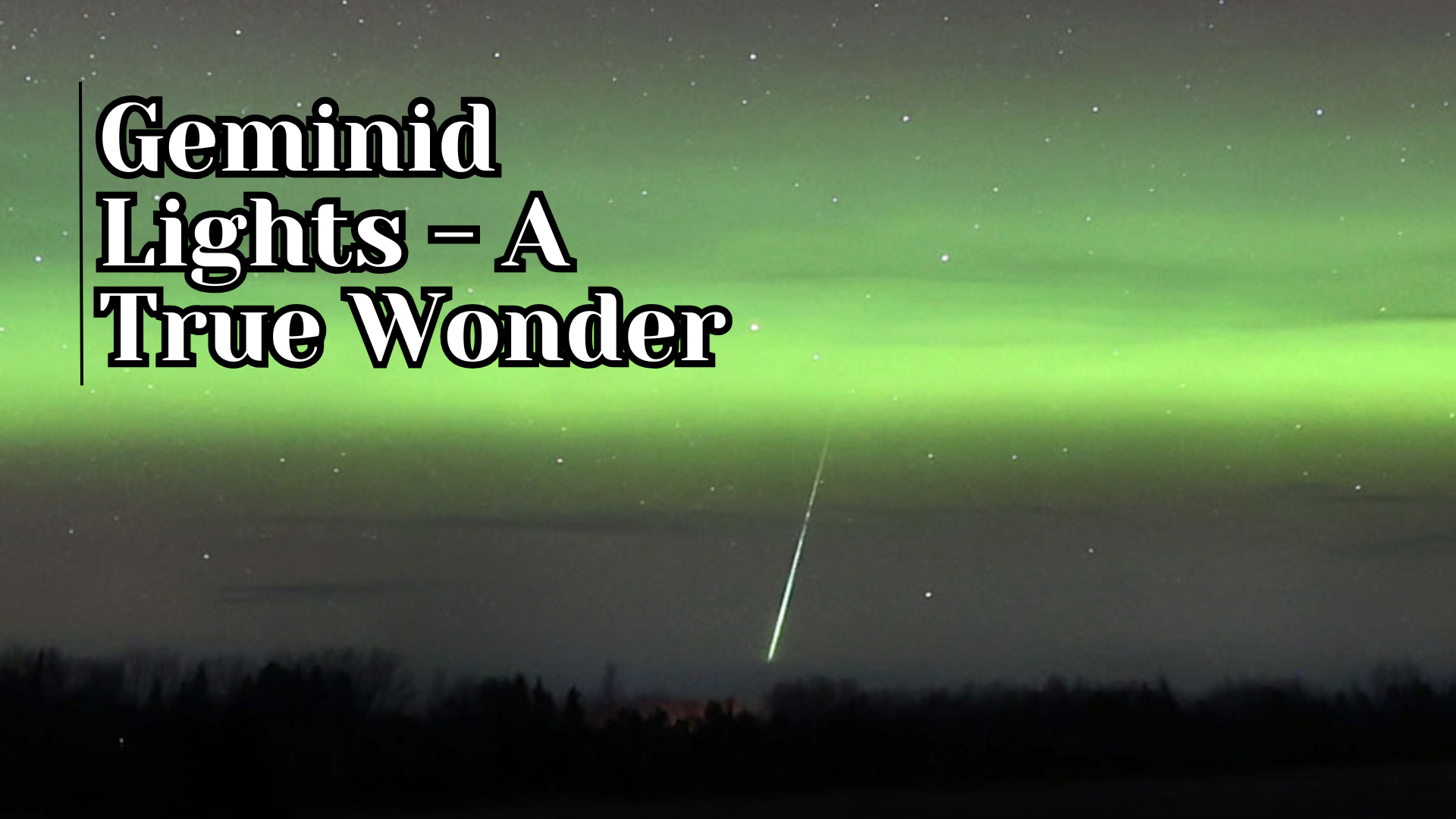
When Earth crosses that path every December, small fragments hit the atmosphere at high speed. Most are no bigger than grains of sand, but they burn intensely as they enter, creating bright streaks that can last a second or two. Some leave glowing trails that hang in the sky briefly before fading.
People often notice that Geminid meteors seem slower than others. That’s not an illusion. Their entry speed is lower than many other meteor showers, which gives the light more time to register in the eye.
What Viewers Are Likely to See
Under dark skies, observers may see several dozen meteors per hour during peak times. In cities, the number is lower, but the brighter ones still make it through. These are the flashes that make people stop mid-sentence or point without thinking.
Colors are sometimes visible, though not always dramatic. Most Geminids appear white or pale yellow, but occasional greenish or bluish streaks have been reported. Much depends on atmospheric conditions and the composition of the particle itself.
Not every meteor will be spectacular. Many are faint, quick, and easy to miss. That uneven experience is part of the event. Unlike fireworks, meteor showers don’t aim to impress on command.
The Role of Weather and Light
Clear skies are essential. Cloud cover, even thin layers, can reduce visibility significantly. Cold air often means clearer skies, but it also means viewers should be prepared. Standing still for long periods in December can become uncomfortable quickly.
Light pollution remains one of the biggest obstacles. Streetlights, buildings, and vehicle headlights all reduce contrast in the night sky. Turning off nearby lights and avoiding phone screens can make a noticeable difference. It takes about 20 minutes for eyes to fully adjust to darkness.
Moonlight can also interfere. This year, moon conditions are manageable around the peak, meaning brighter meteors should still be visible, though fainter ones may be harder to spot.
Not Just a Science Event
For astronomers, the Geminids raise interesting questions about how asteroid-like objects produce meteor showers. For most people, though, the appeal is simpler. It’s one of the few natural events that doesn’t require explanation to enjoy.
People watch alone, with friends, or with family. Some make it a quiet tradition. Others stumble into it by accident, stepping outside at the right moment. Either way, the experience is brief and personal. You can’t replay it. You either catch it or you don’t.
That unpredictability is part of why meteor showers still matter, even in a world saturated with high-definition images of space. Seeing one in person feels different. It happens in real time, without warning, and disappears just as quickly.
A Reliable End-of-Year Fixture
The Geminids have been observed for more than a century, and their intensity has increased over time. Astronomers expect them to remain strong for years to come, though no meteor shower lasts forever.
As the peak passes, activity drops off, but a few meteors may still appear on surrounding nights. For those who miss the main event, there is always next December. The Geminids don’t rush. They arrive, peak, and fade the same way every year.
For now, the advice is simple. If skies are clear around December 13 and 14, step outside after midnight, give your eyes time to adjust, and look up. You might see nothing. Or you might catch a sudden streak of light that lasts less than a second and stays in your memory much longer.